Cochem, Worms and Heidelberg
In May 2026 we drove to Germany for a two week holiday. We used the Hull to Rotterdam ferry and then drove through the Netherlands into Germany. During the week immediately before starting our journey, I found out two things that were not an issue for us on our previous trips to Germany. First, the use of GB plates on the car were no longer valid. They now had to be UK plates. I ordered some magnetic ones quickly from Amazon but when they arrived I found that my current car was not made out of ferrous-based metal and therefore the plates wouldn't stick anywhere. I therefore went to Halfords and had a new number plate made.
The second issue was that Germany has introduced low emission zones in various parts of the country. If you drive into a zone without having previously purchased a low emission zone authorisation (a green sticker) you are liable to a fine. As there wasn't time to purchase one online and have it delivered to us in the post, I decided that I'd go to the local TÜV (MOT in English) station once we got to Cochem and buy one. This would be ok as long as I didn't leave the Autobahn (you don't need a green sticker on the Autobahn if it goes through a low emission zone). This was a good plan except that as we were driving down the Autobahn to our first stop in Cochem, the Autobahn was closed near to Mönchengladbach and we had to get off ... and Mönchengladbach is one of the cities that has a low emission zone!
Anyway, we did eventually get to Cochem.
Cochem
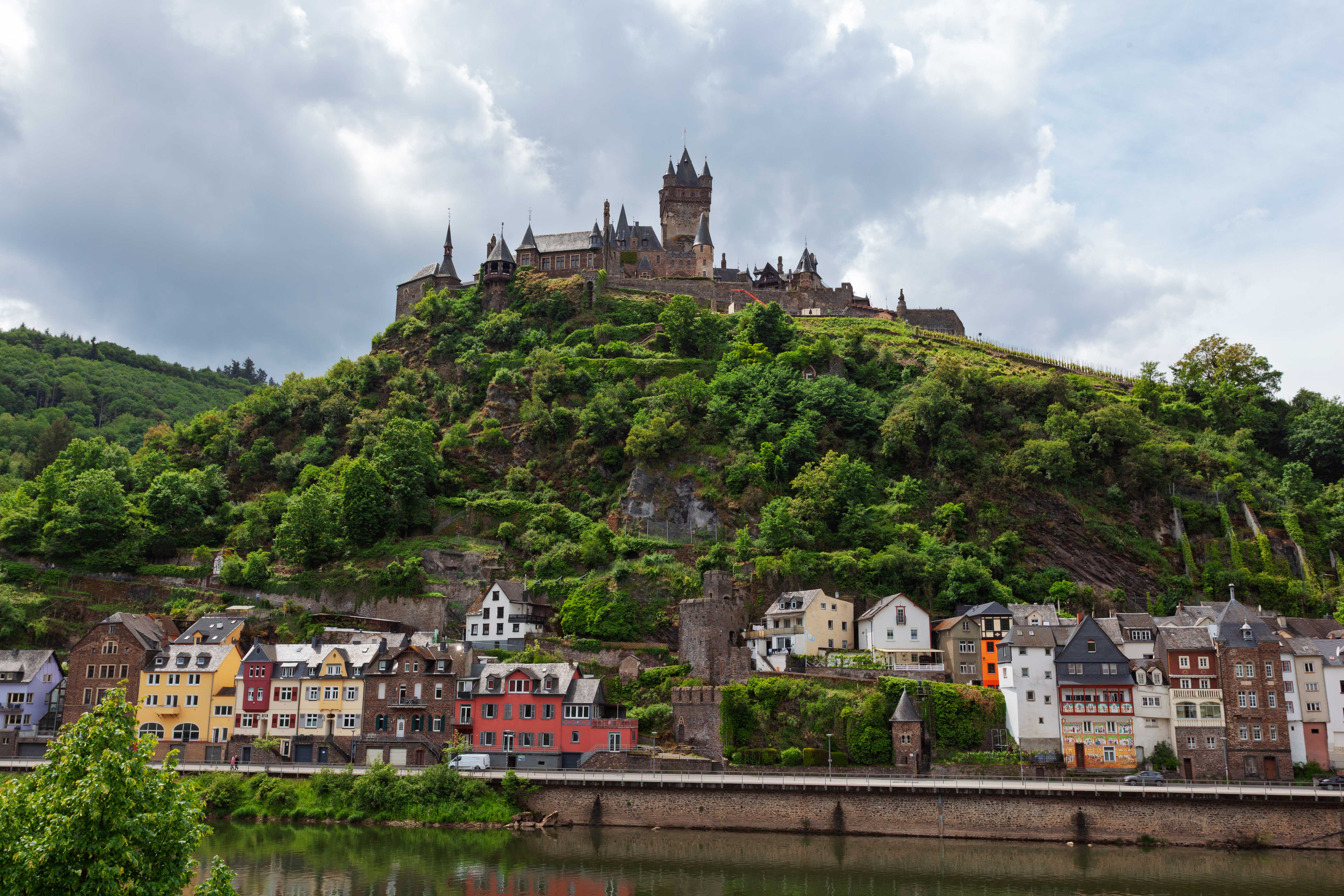
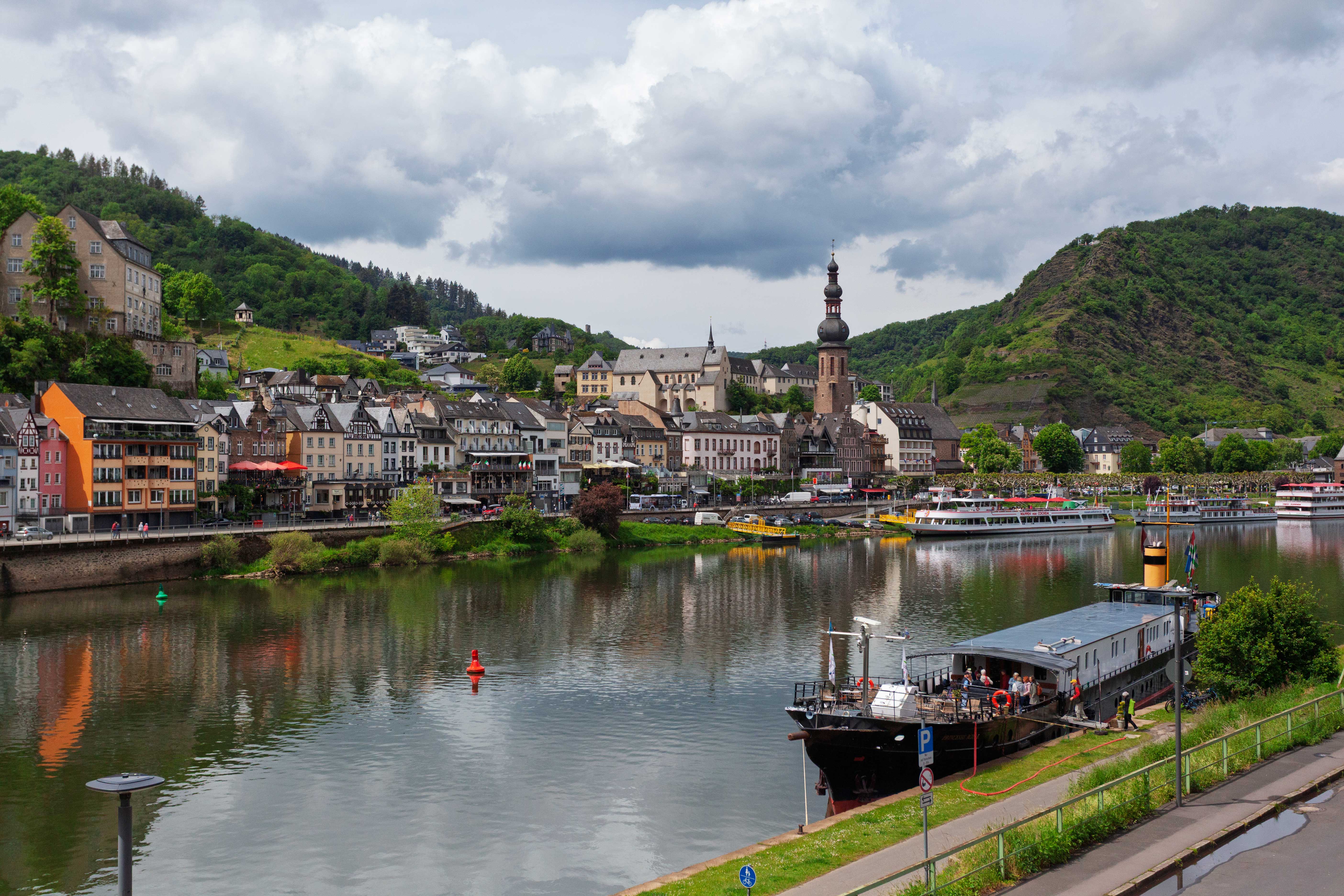
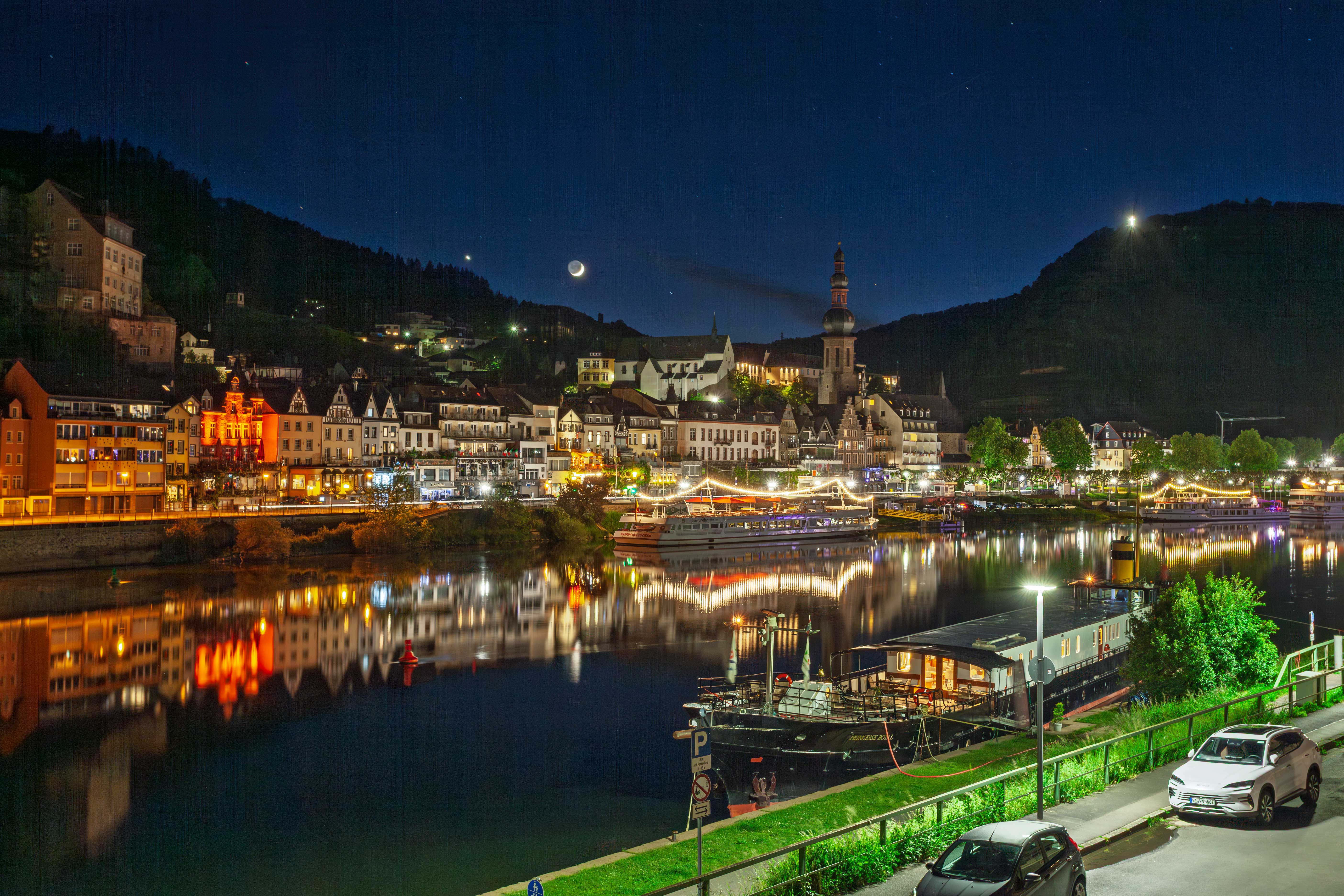
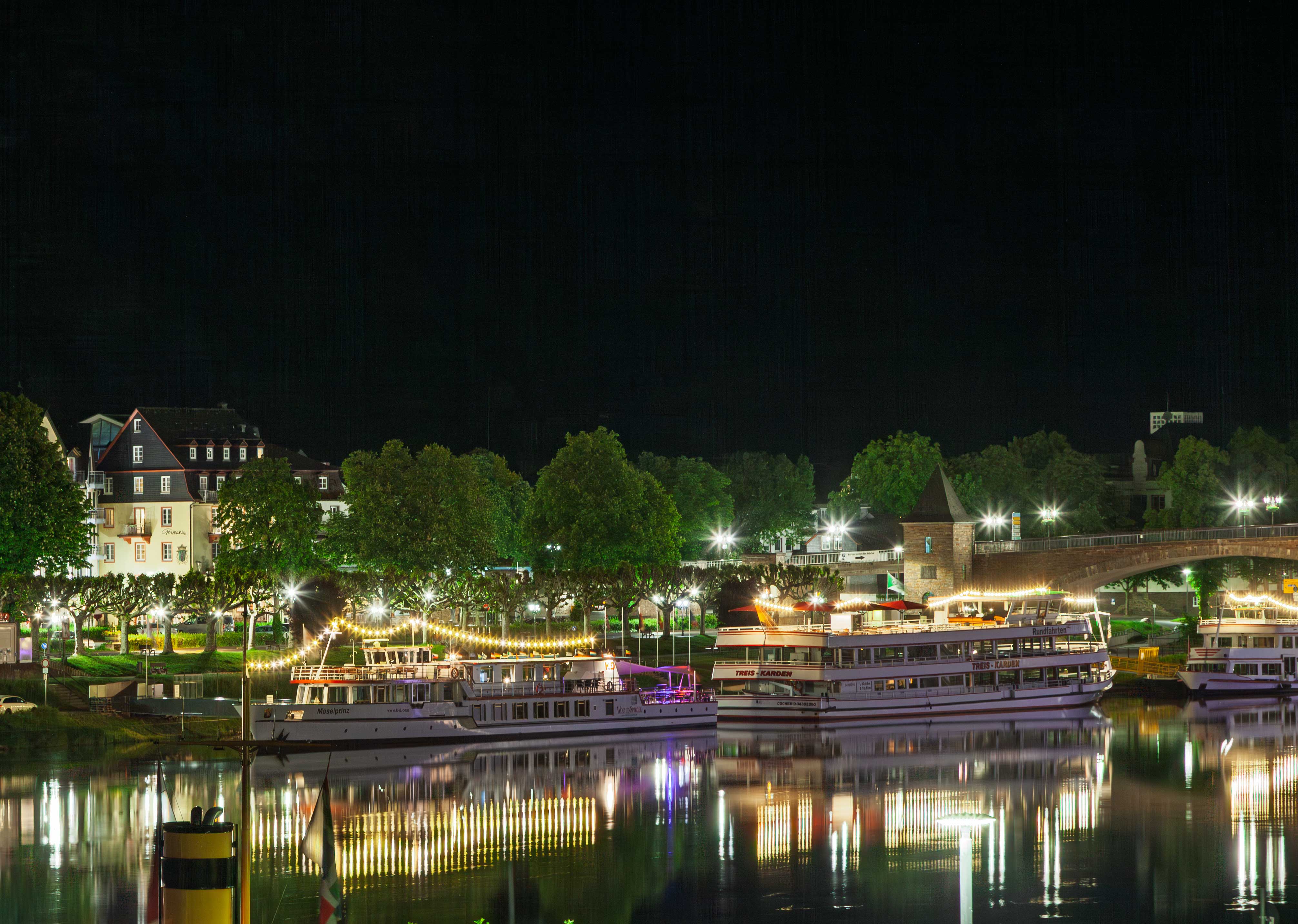
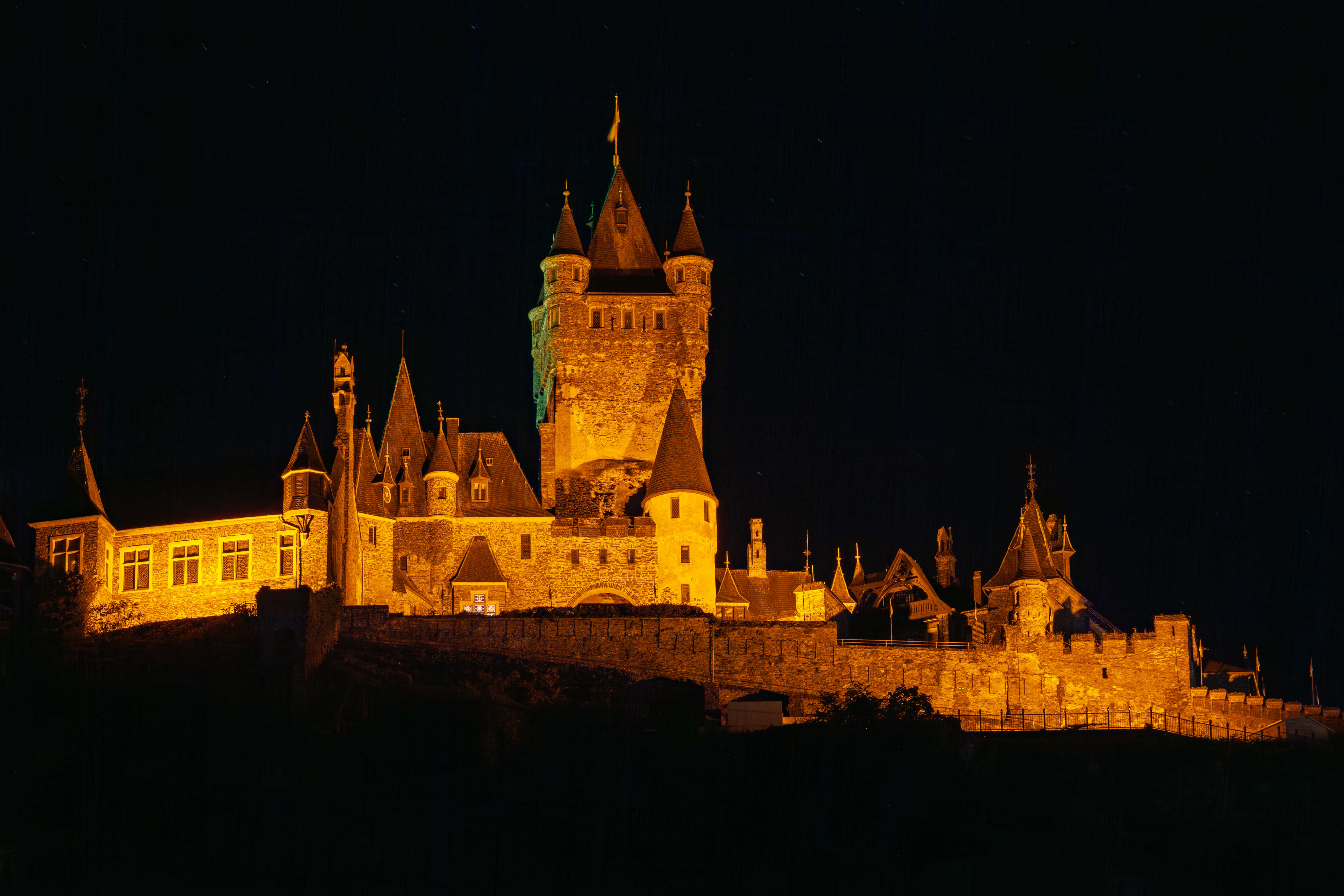
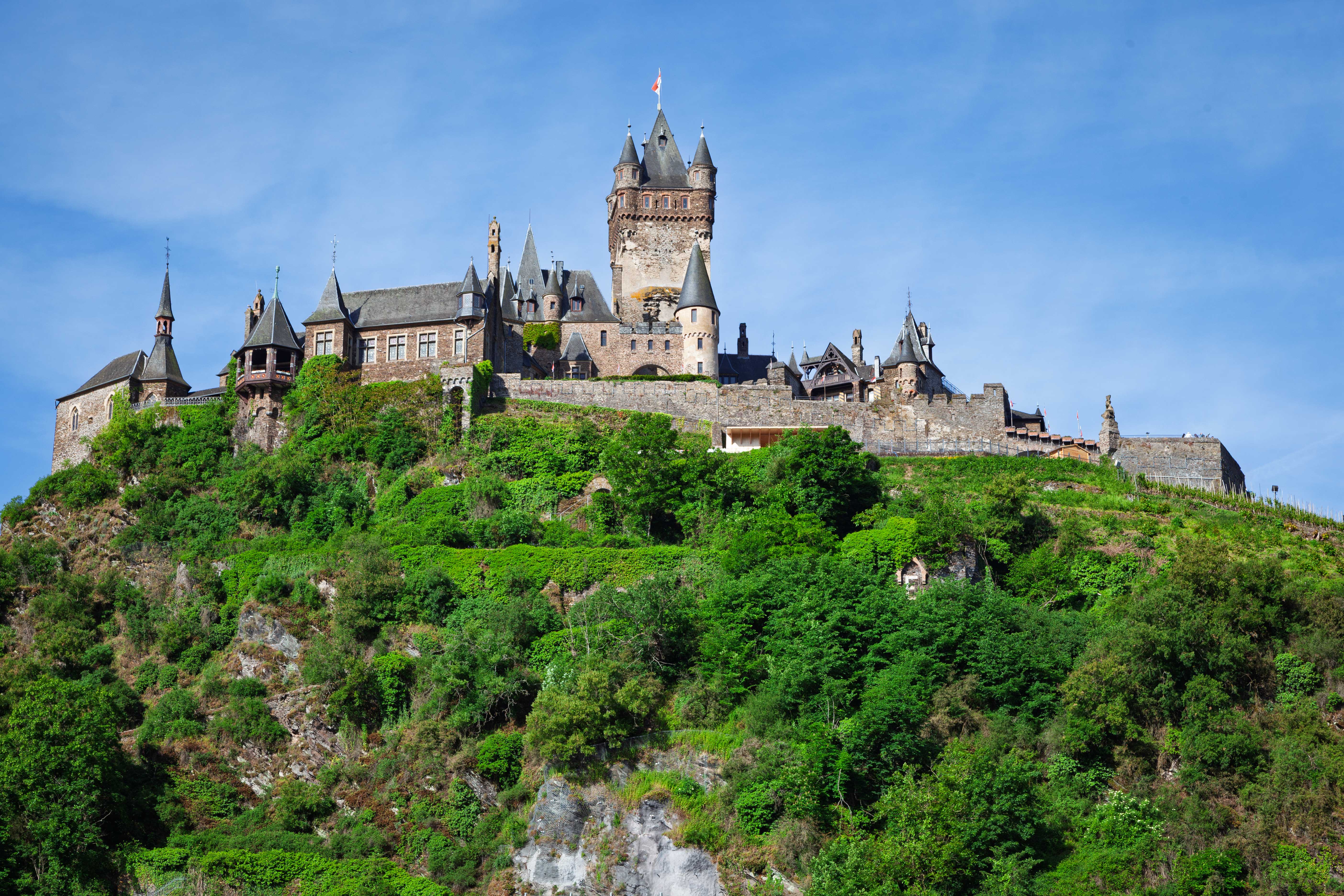
In Cochem we rented a Ferienwohnung - "Haus zur Linde" at Talstrasse 2, Cochem 56812. It was perfectly situated as it stood on the other side of the river from the main town of Cochem, directly opposite the Reichsburg. So we had a spectacular view of the Reichsburg and the main town from our balcony.
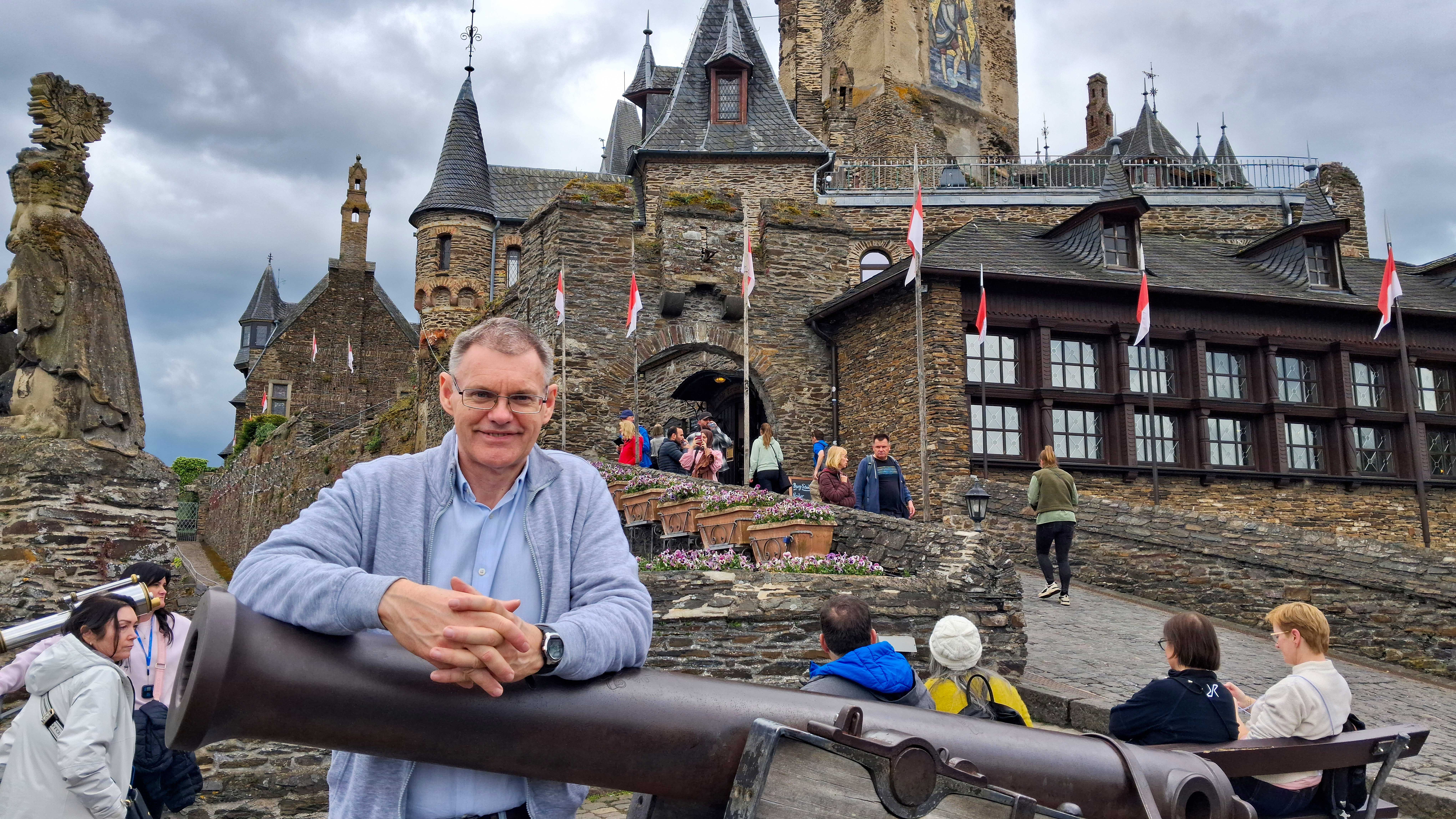
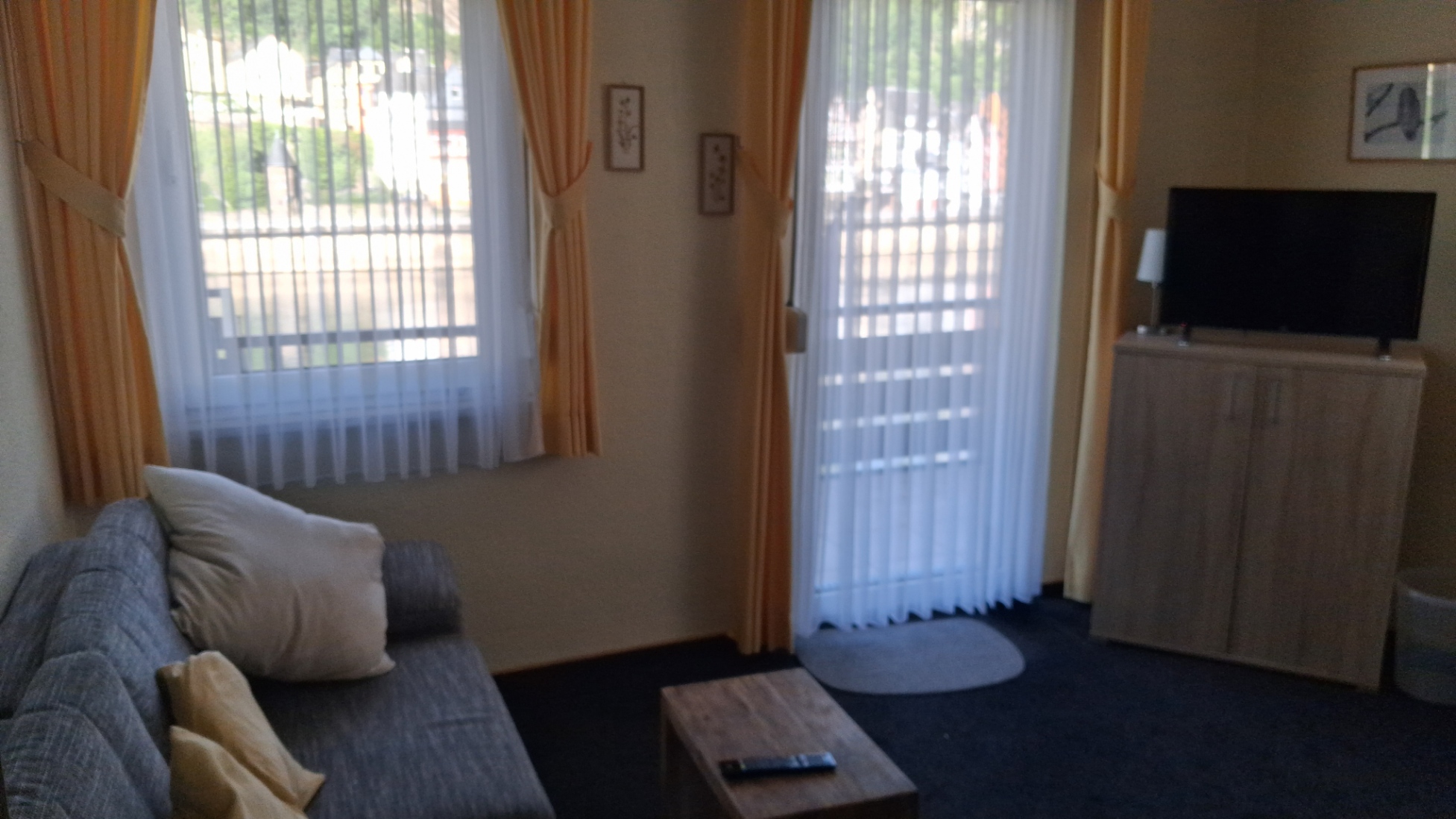
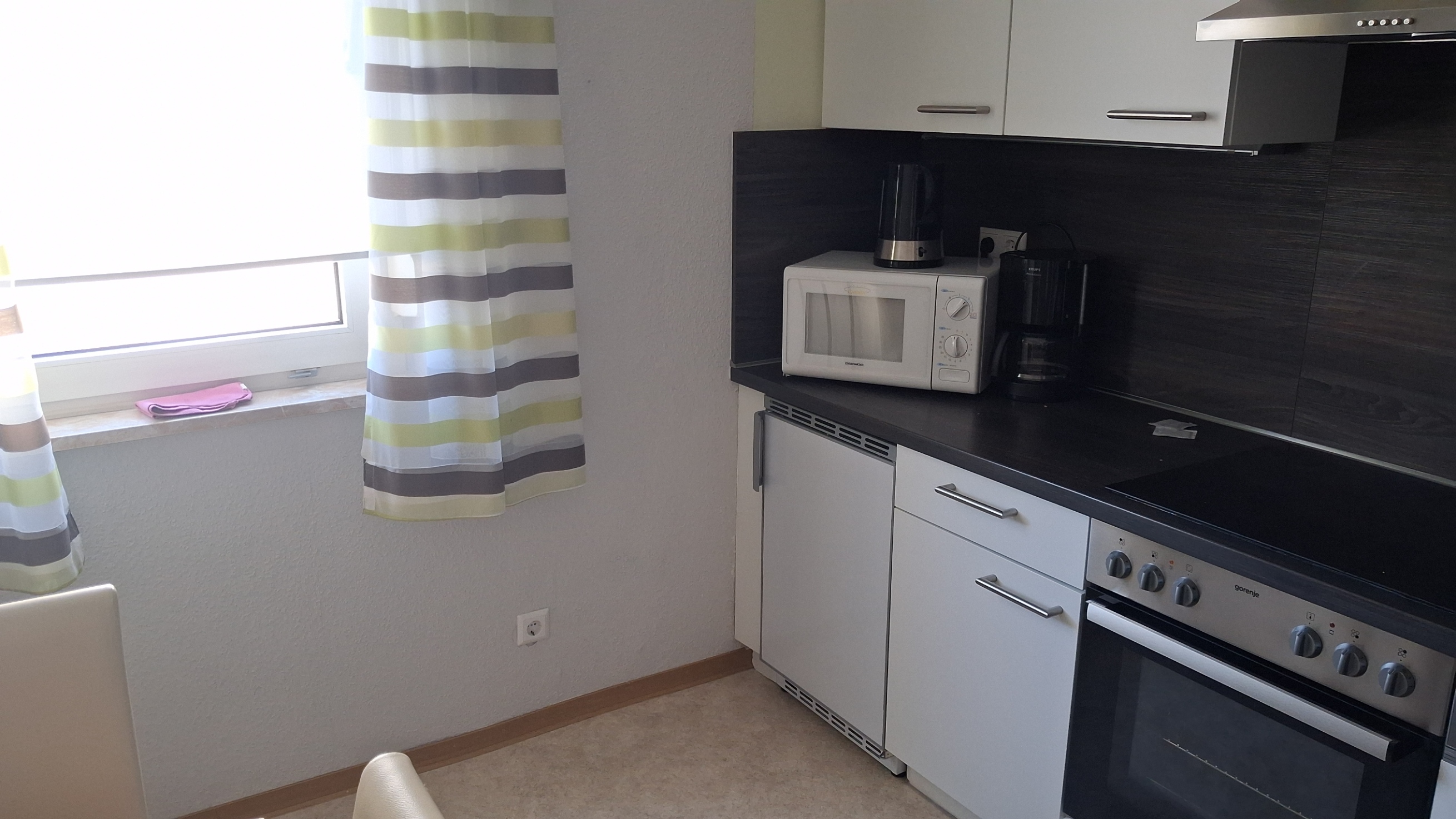
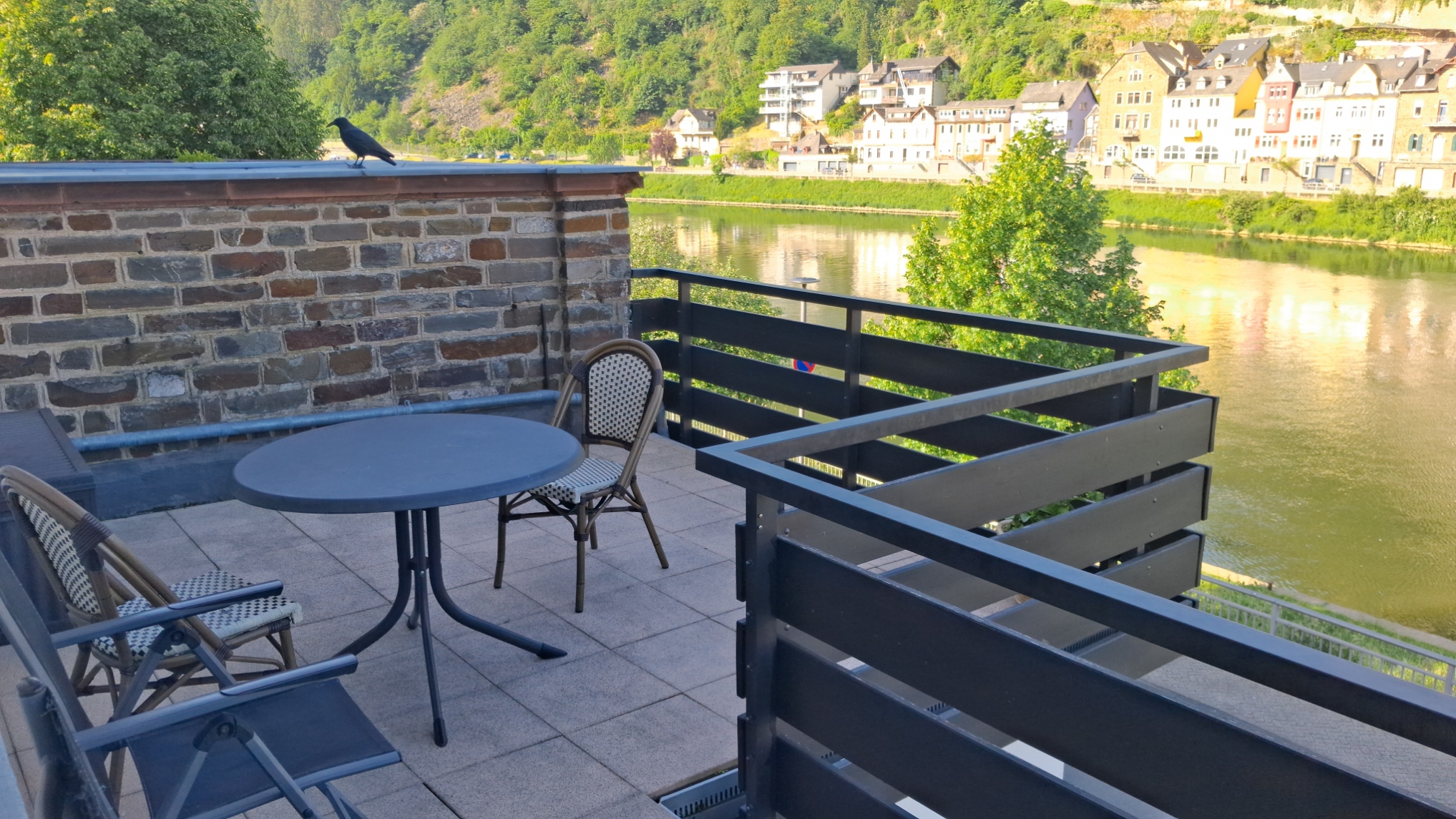
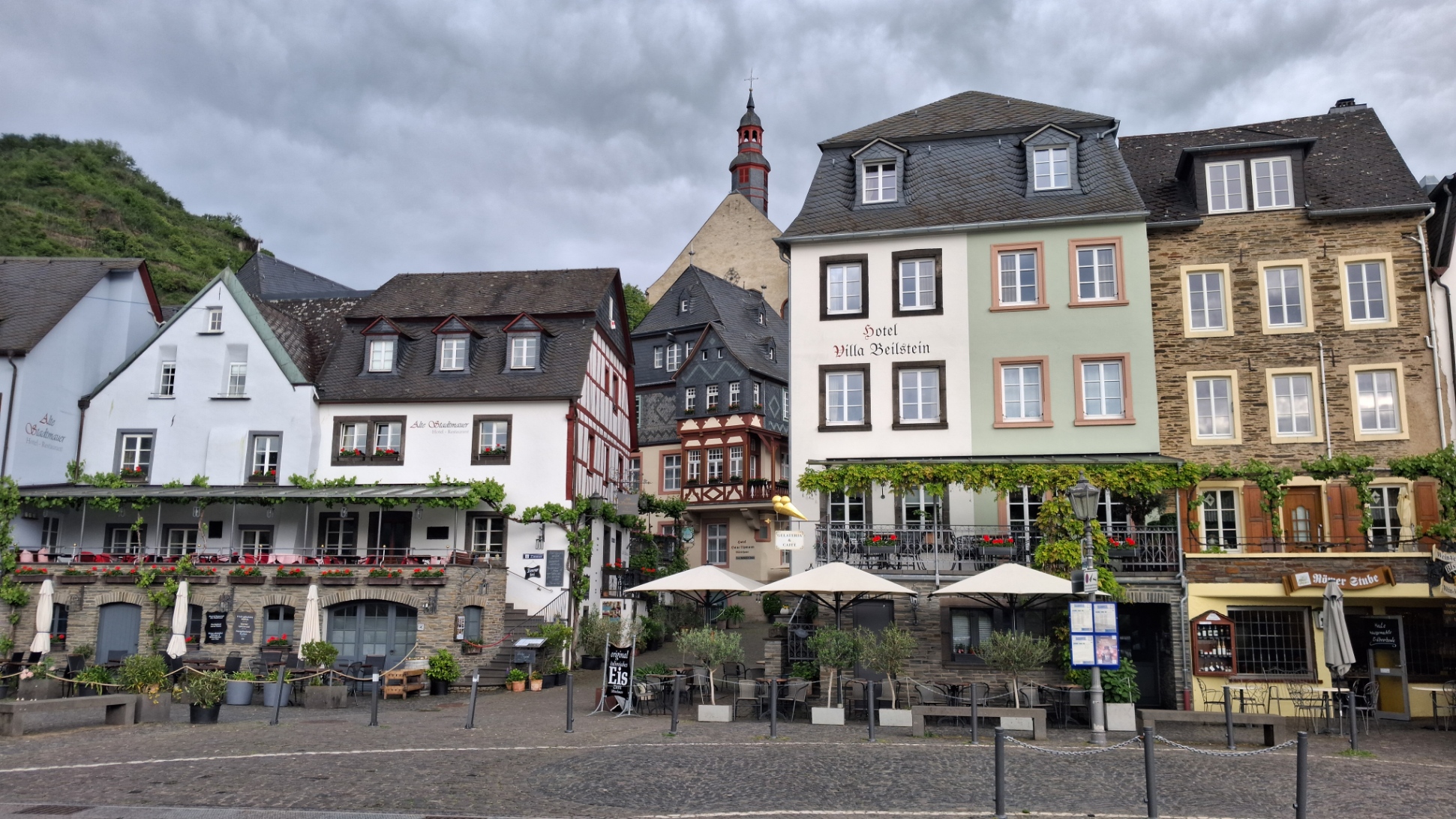
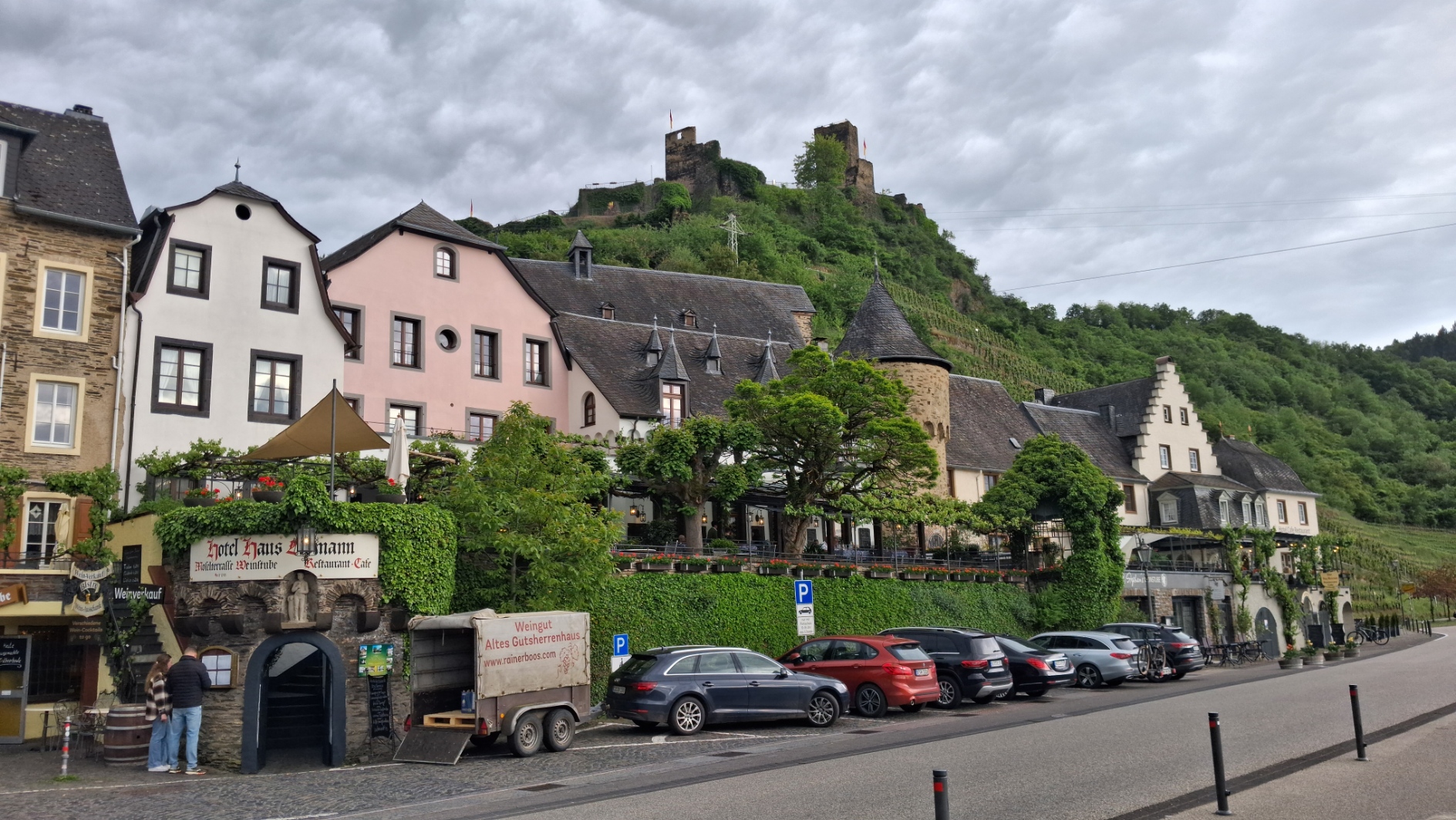
On one of the days that we stayed in Cochem we visited the local town of Beilstein and had a meal at "Hotel Gute Quelle" which is a restaurant that we have enjoyed a number of times over the years.
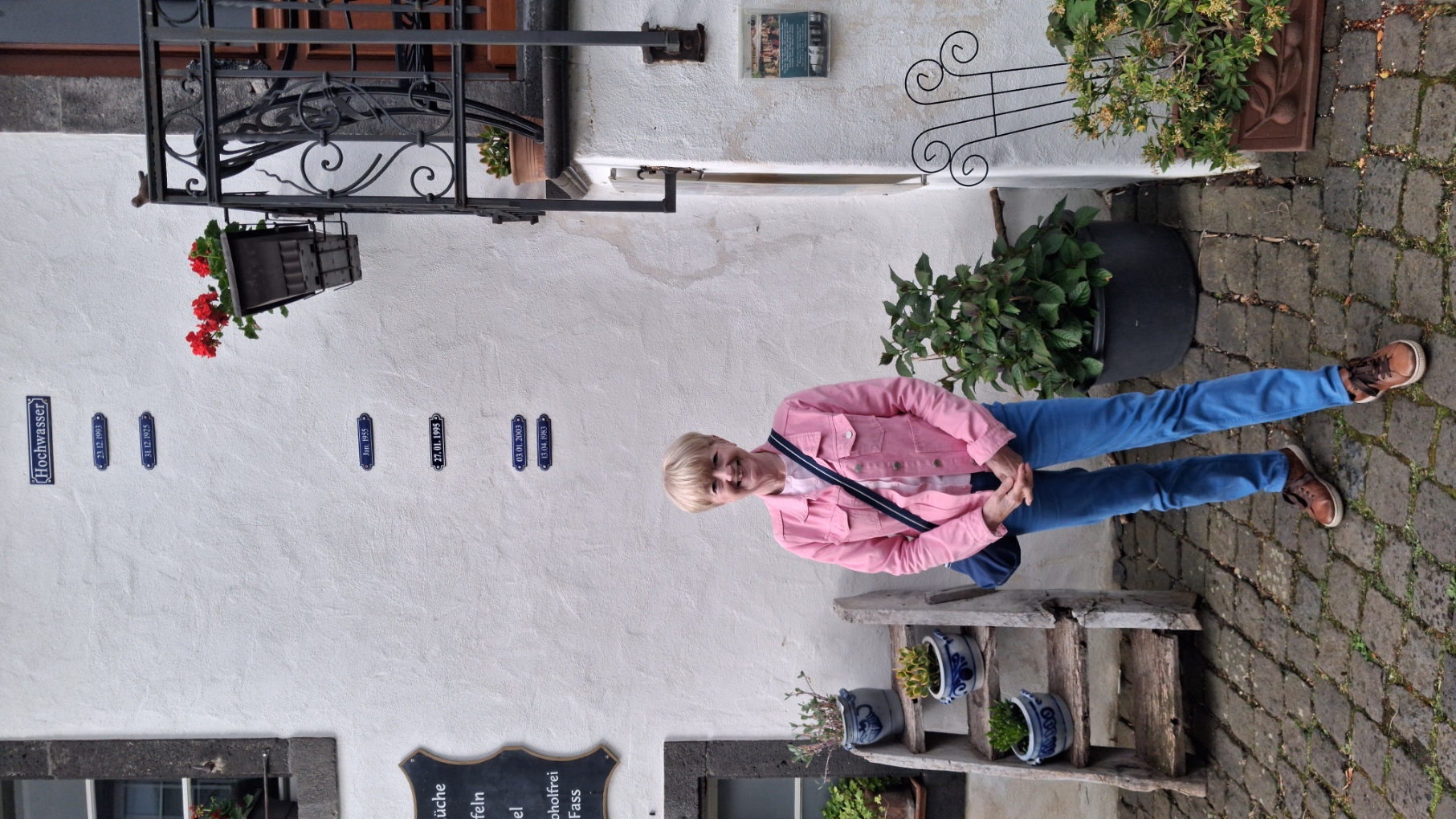
Because Beilstein is on the banks of the Mosel, it is susceptible to flooding and in the first photograph below you can see Pat stood by the High Water Marks on one of the buildings.
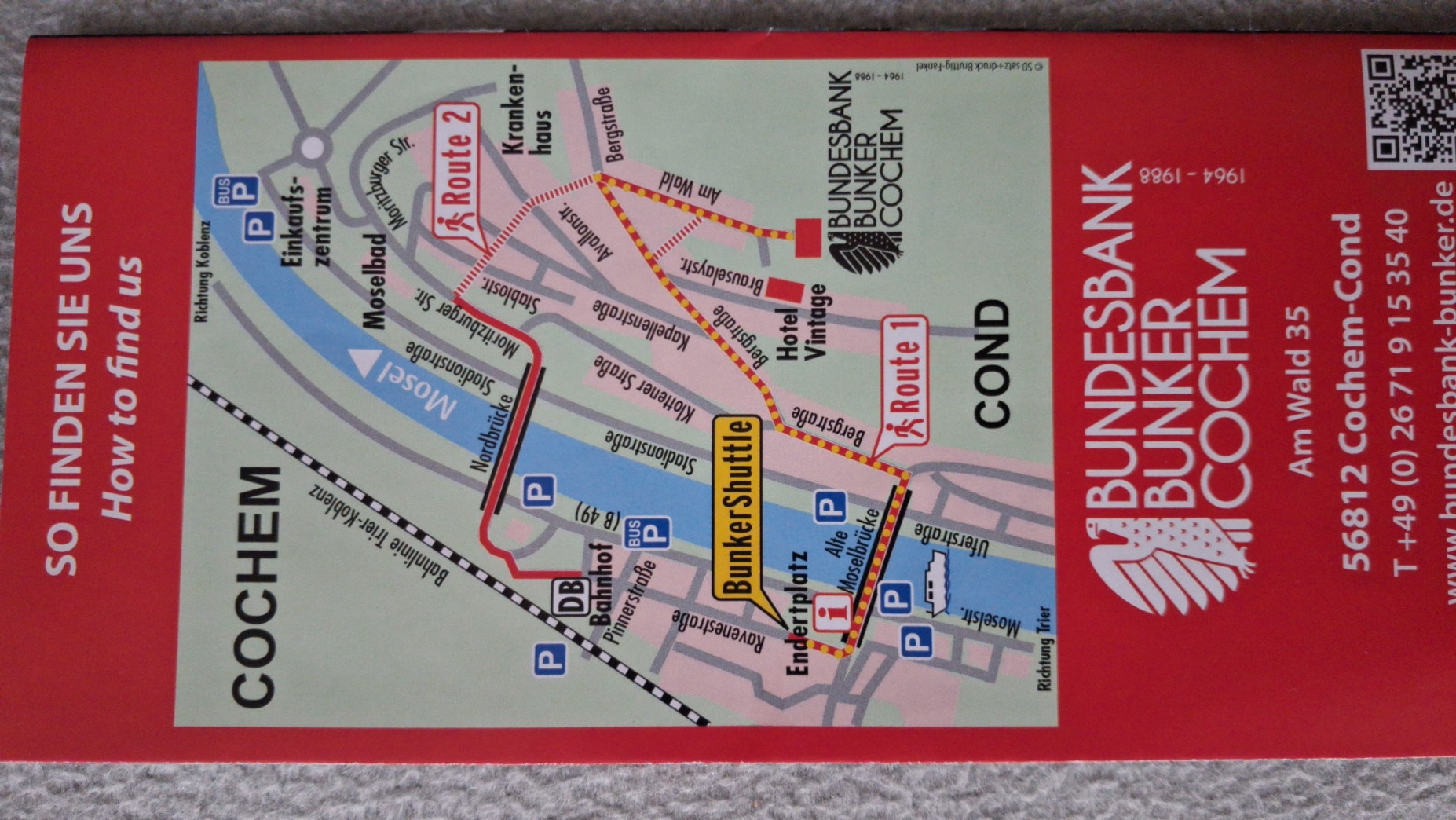
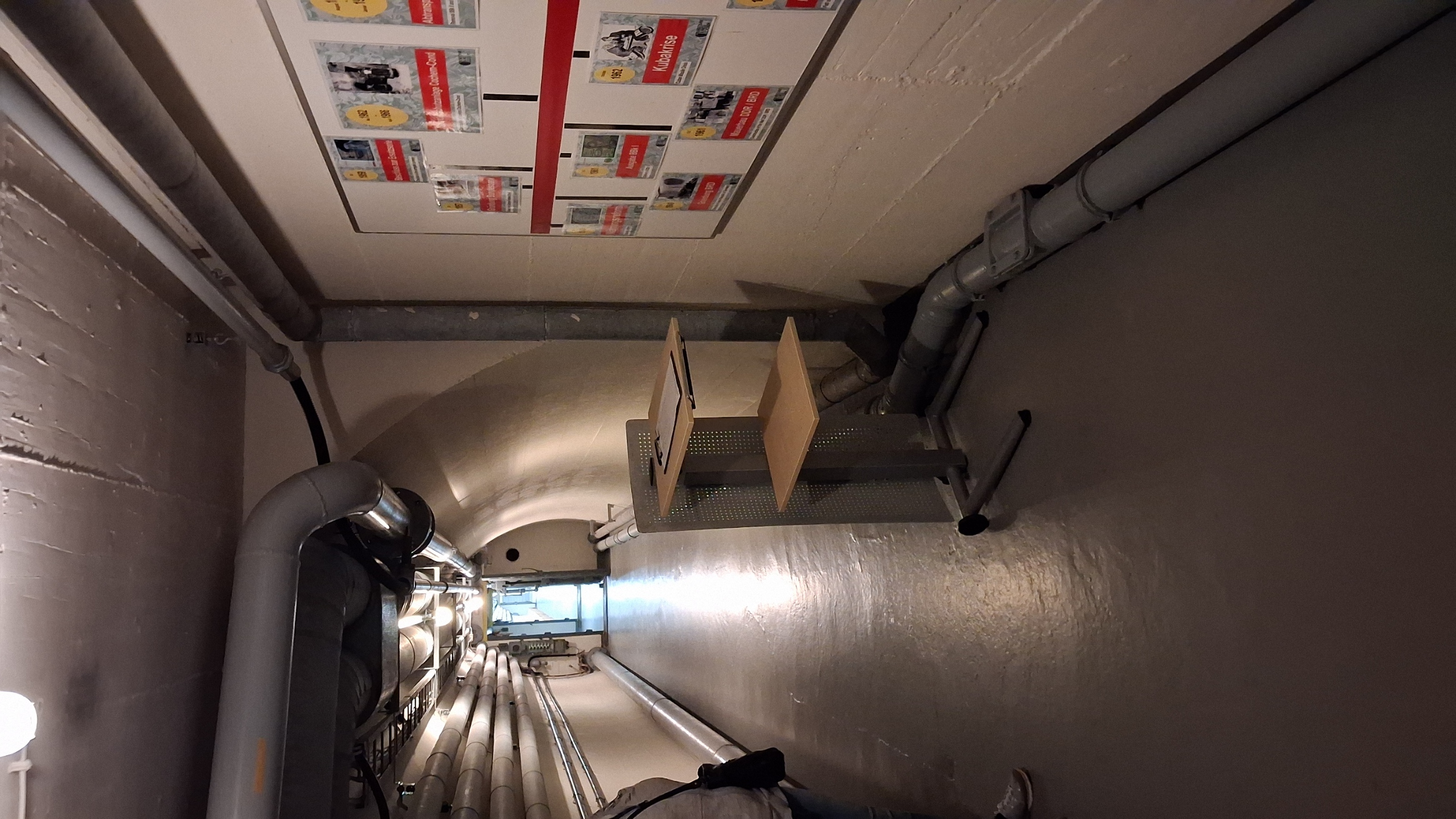
One place we'd never visited before during our previous stays in Cochem was the Bundesbank Bunker. We'd simply not heard of this before. Back in the Cold War years the German government had been fearful that the Soviet Union would flood the country with counterfeit currency which would have seriously undermined the German economy. To protect against this possibility they stored 20 billion Deutsch Marks in an underground bunker in Cochem. Except they weren't actual Deutsch Marks. They were similar to the existing Deutsch Marks but with slightly different pictures on them. The idea was that if the Russians did attack the existing currency as feared then, within the space of 14 days, the government would have been able to replace the entire currency then in circulation with the replacement notes stored in the bunker.
As it turned out, the fears were never realised, the Cold War came to an end and the government simply shredded the 20 billion replacement Deutsch Marks.
What Pat and I found remarkable about the whole story was that the bunker was installed in a residential neighbourhood of Cochem and yet not even the neighbouring residents were aware it was there. This was because three fake houses were erected through which the bunker was entered. Everyone simply thought that the houses were real and housed families. The bunker was therefore able to operate in secret throughout its lifetime of operation.
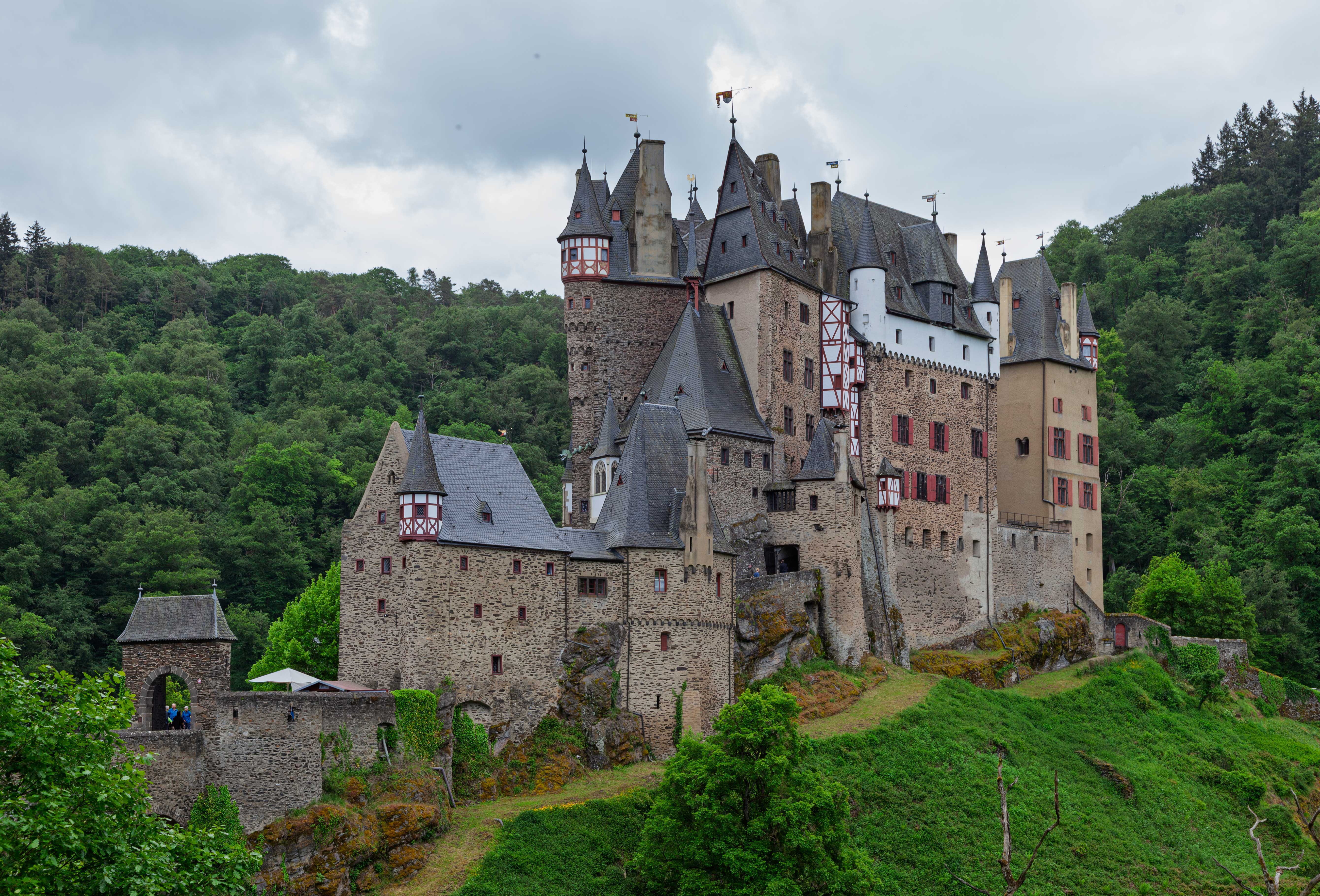
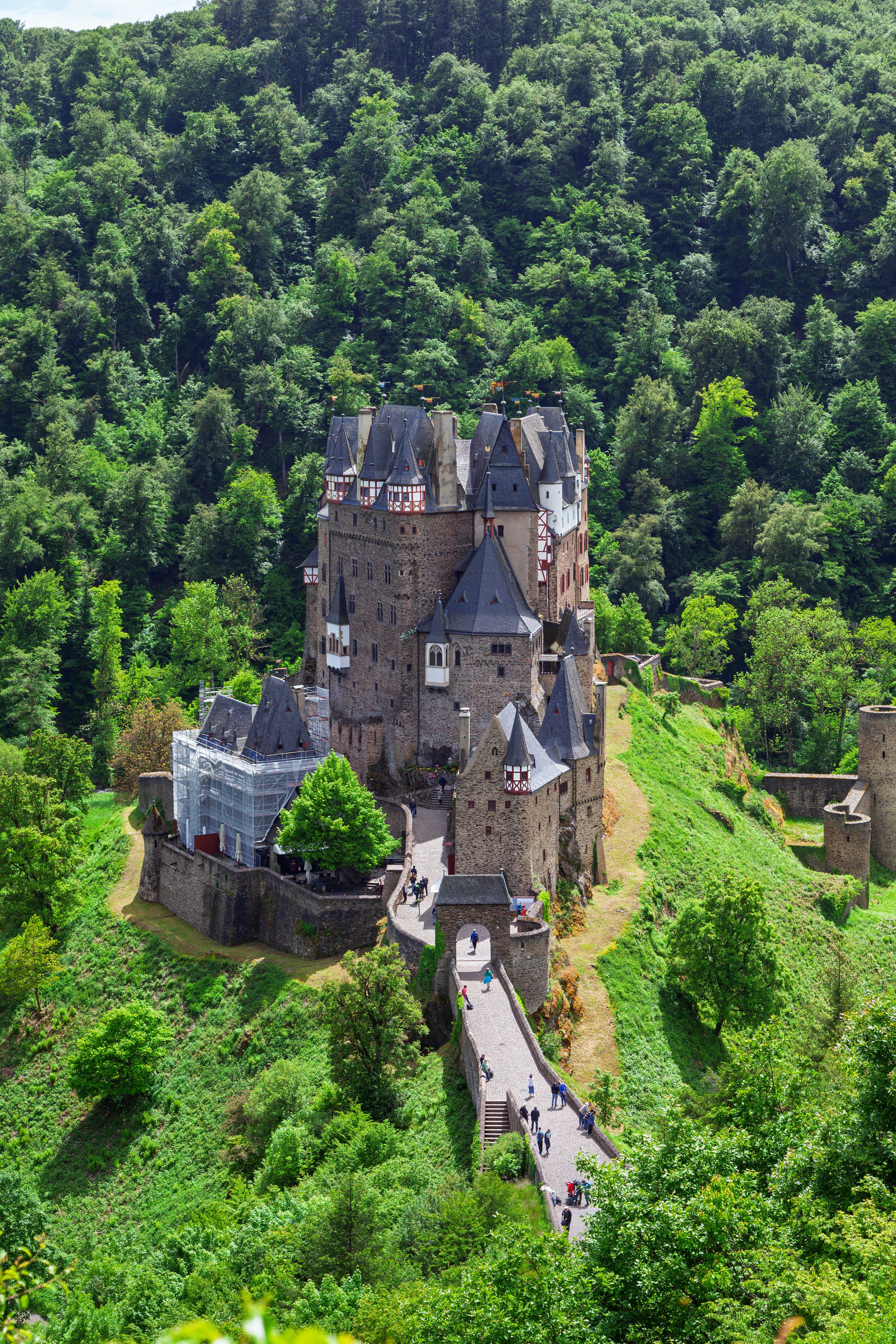
Whilst staying in Cochem, we visited Burg Eltz. We've been a number of times before but as it's such a stunning building, we made yet another trip.
Worms
Worms is famous for its historical connection with the Reformation. It was here, at the Diet of Worms, in April 1521, that Martin Luther was ordered by the Holy Roman Emperor, Charles V, to recant his radical religious writings. Instead of backing down under the threat of execution, Luther launched a historic defence of religious freedom, stating his conscience was captive to the Word of God.
According to historical tradition, he concluded his speech with his most famous declaration: "Here I stand; I can do no other. God help me. Amen." (Though eyewitness transcripts vary on whether he uttered the exact phrase "Here I stand," it perfectly captured his unwavering resolve).
The phrase "The Diet of Worms" is an amusing one to native English speakers as it reads as though someone was eating earthworms. However, "The Diet" was the historical equivalent of a parliament and "Worms" is the city in which the parliament met.
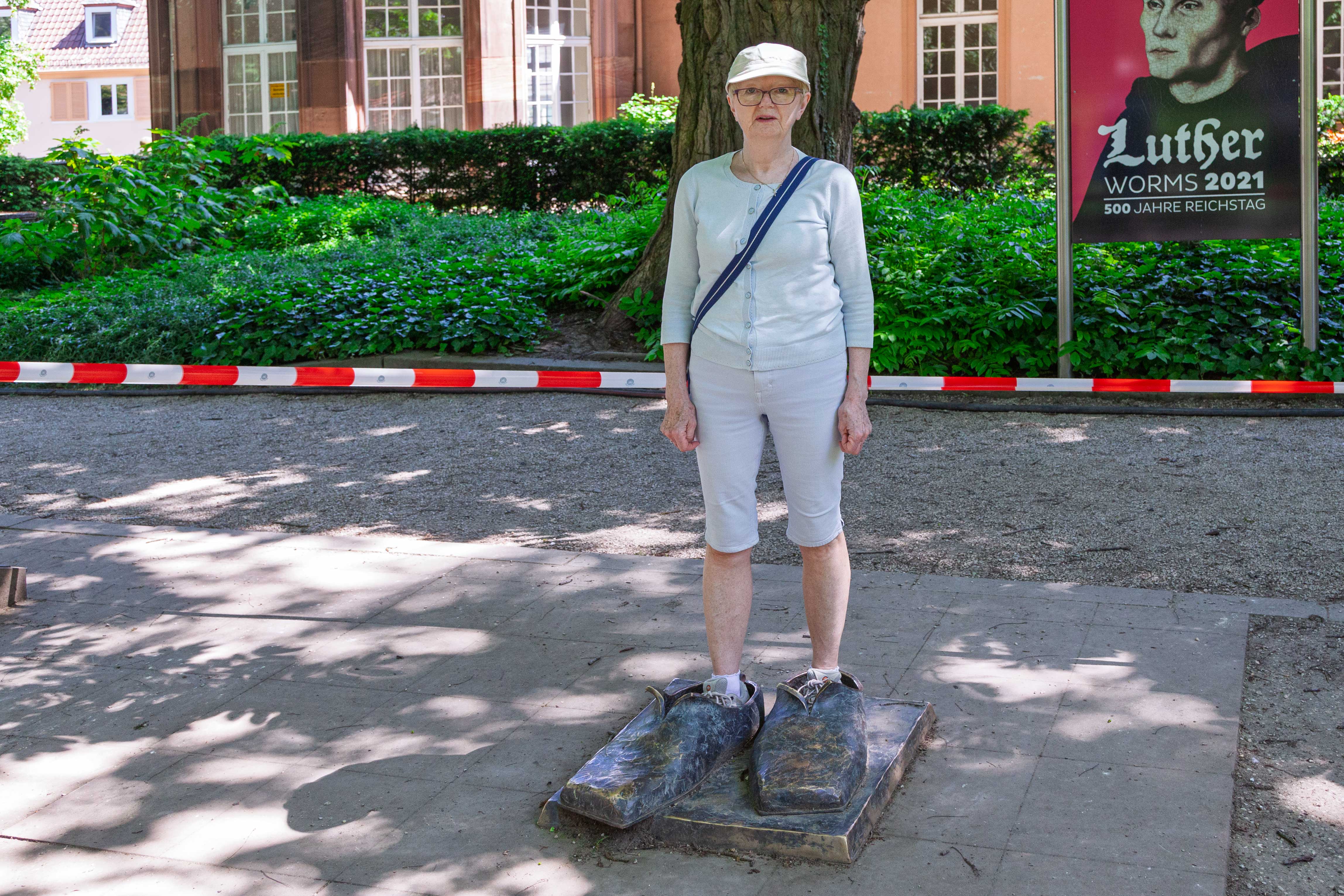
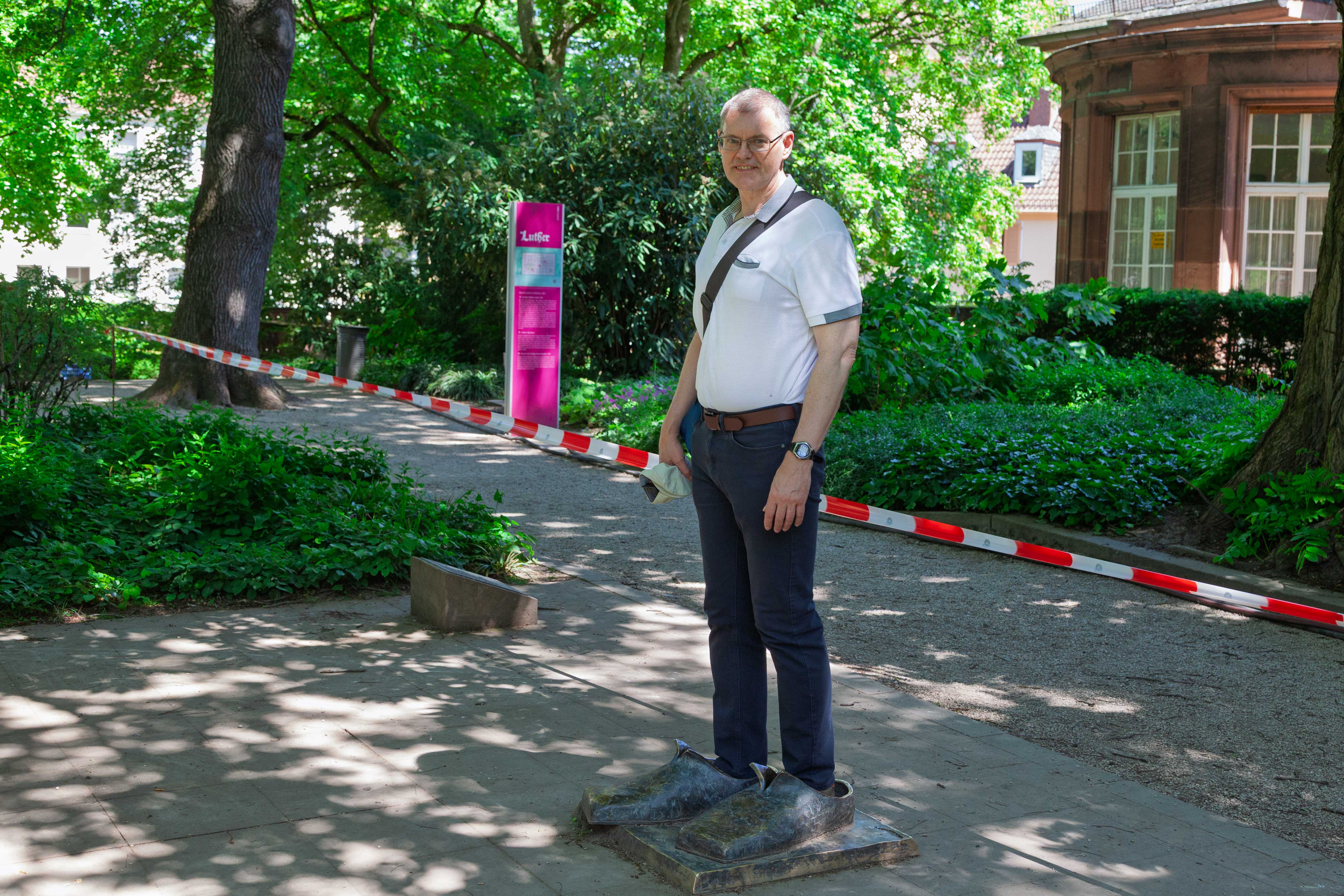
The building where Luther made his speech is no longer there but a monument consisting of a very large pair of metal shoes has been erected at the supposed spot at which the speech was made. It is therefore possible to step into Luther's shoes as Pat and I did:
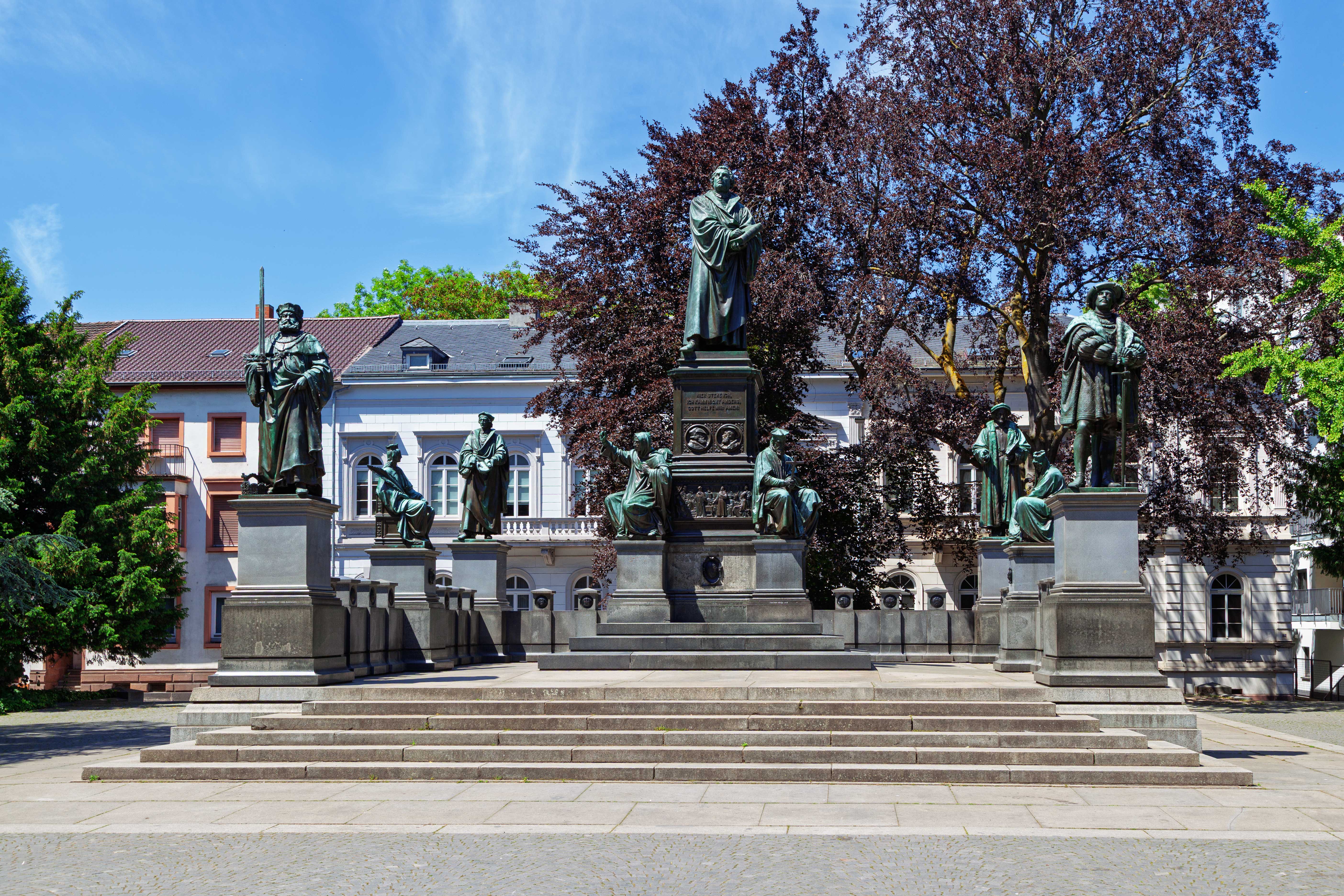
There's also a large monument to Martin Luther close by -
We stayed in a hotel for the one night that we were in Worms. It was the Asgard Hotel and was conveniently placed just 5-10 minutes walk from Worms Cathedral and various shops, restaurants and ice cream parlours.
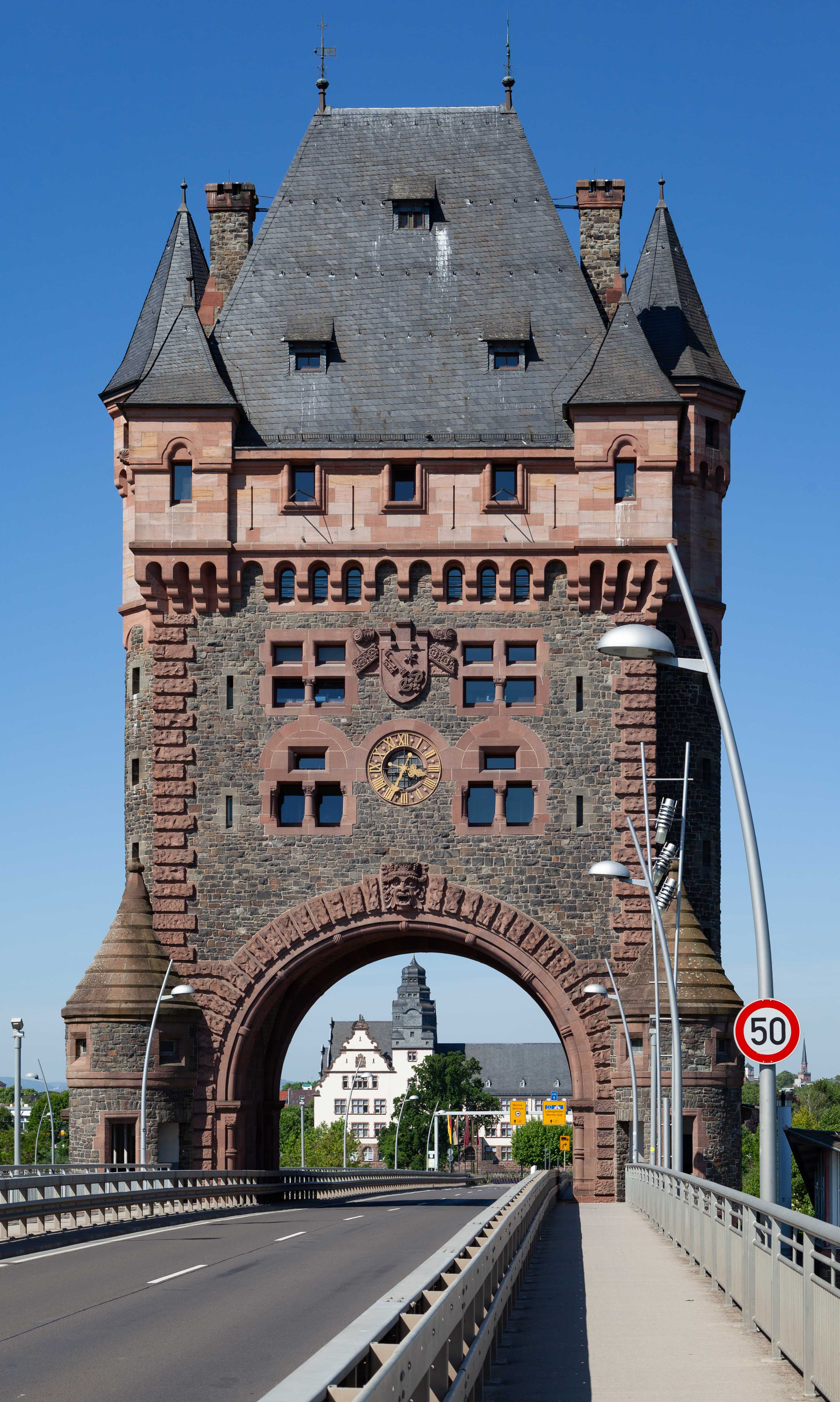
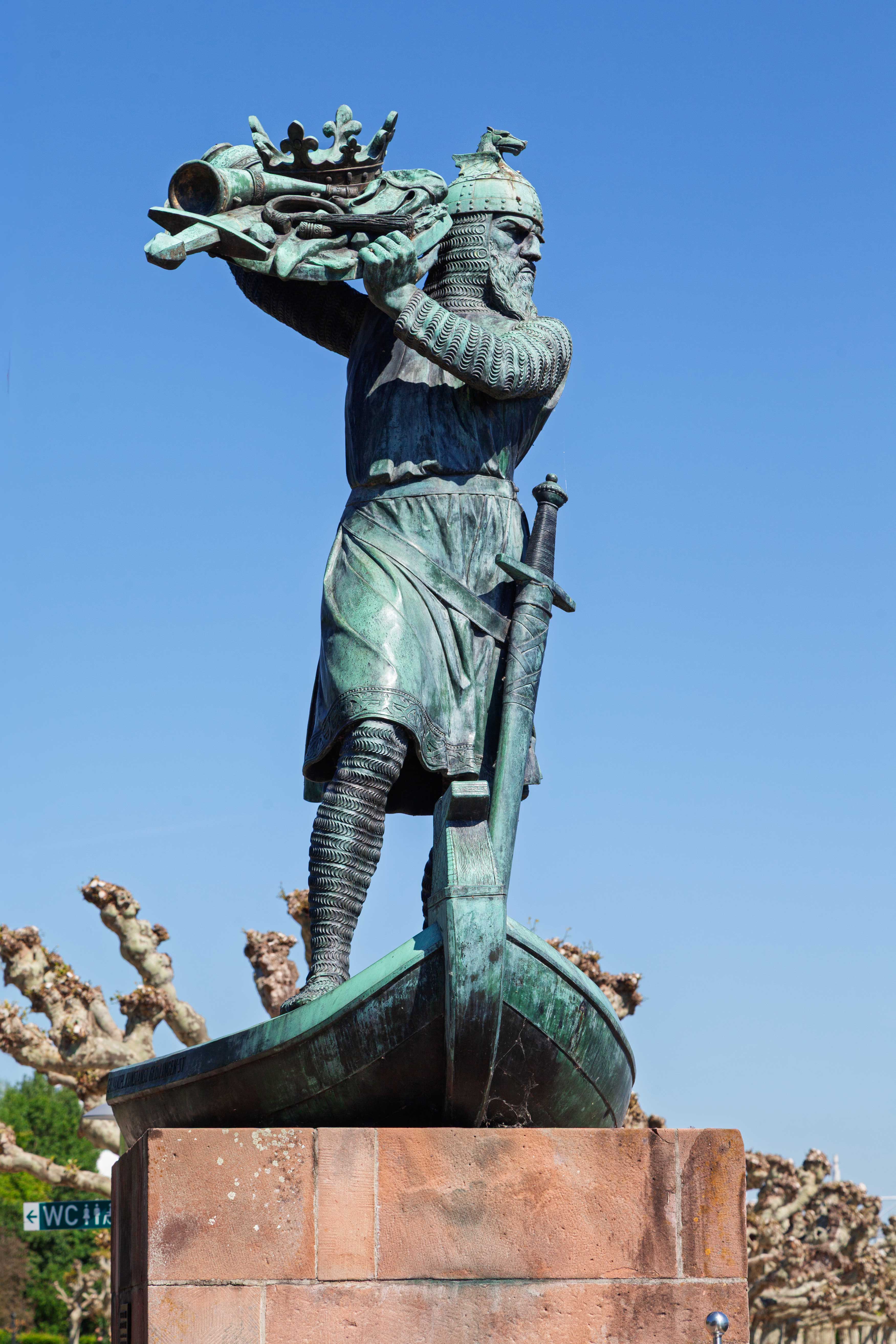
When we left Worms after our overnight stay, we first of all made our way down to the River for a stroll near to the bridge and also a monument to Hagen who is a character in the Niebelungenlied which has its roots in Worms.
The Nibelungenlied is an epic medieval German poem combining historical myth with a tragic tale of pride, betrayal, and total destruction.
The narrative centres on Siegfried, a prince of unparalleled strength who wins the vast, cursed Nibelung treasure, slays a dragon, and becomes invulnerable by bathing in its blood—except for a single spot on his back covered by a fallen linden leaf.
Siegfried travels to Worms to court Kriemhild, the beautiful princess of Burgundy. To secure permission to marry her, Siegfried uses his cloak of invisibility to secretly help her brother, King Gunther, conquer and wed the fierce Icelandic warrior queen Brunhild.
Decades of peace shatter, however, when a bitter dispute over royal status erupts between the two queens. Kriemhild publicly humiliates Brunhild by revealing Siegfried's secret role in her subjection. Seeking to restore his queen's honor and eliminate a dangerous rival, Gunther's fiercely loyal vassal, Hagen, tricks Kriemhild into marking Siegfried's vulnerable spot on his clothing. Hagen brutally assassinates Siegfried during a royal hunt and subsequently steals the Nibelung gold, dumping it into the Rhine.
Consumed by a desire for vengeance, the grieving Kriemhild later marries Etzel (Attila the Hun) to gain an army. Years later, she invites her Burgundian kinsmen to a grand feast in Hungary, ignoring Hagen's warnings. The tension explodes into an apocalyptic battle. Kriemhild executes the captured Hagen herself with Siegfried's sword before being cut down by a horrified warrior, leaving both dynasties completely destroyed.
Heidelberg
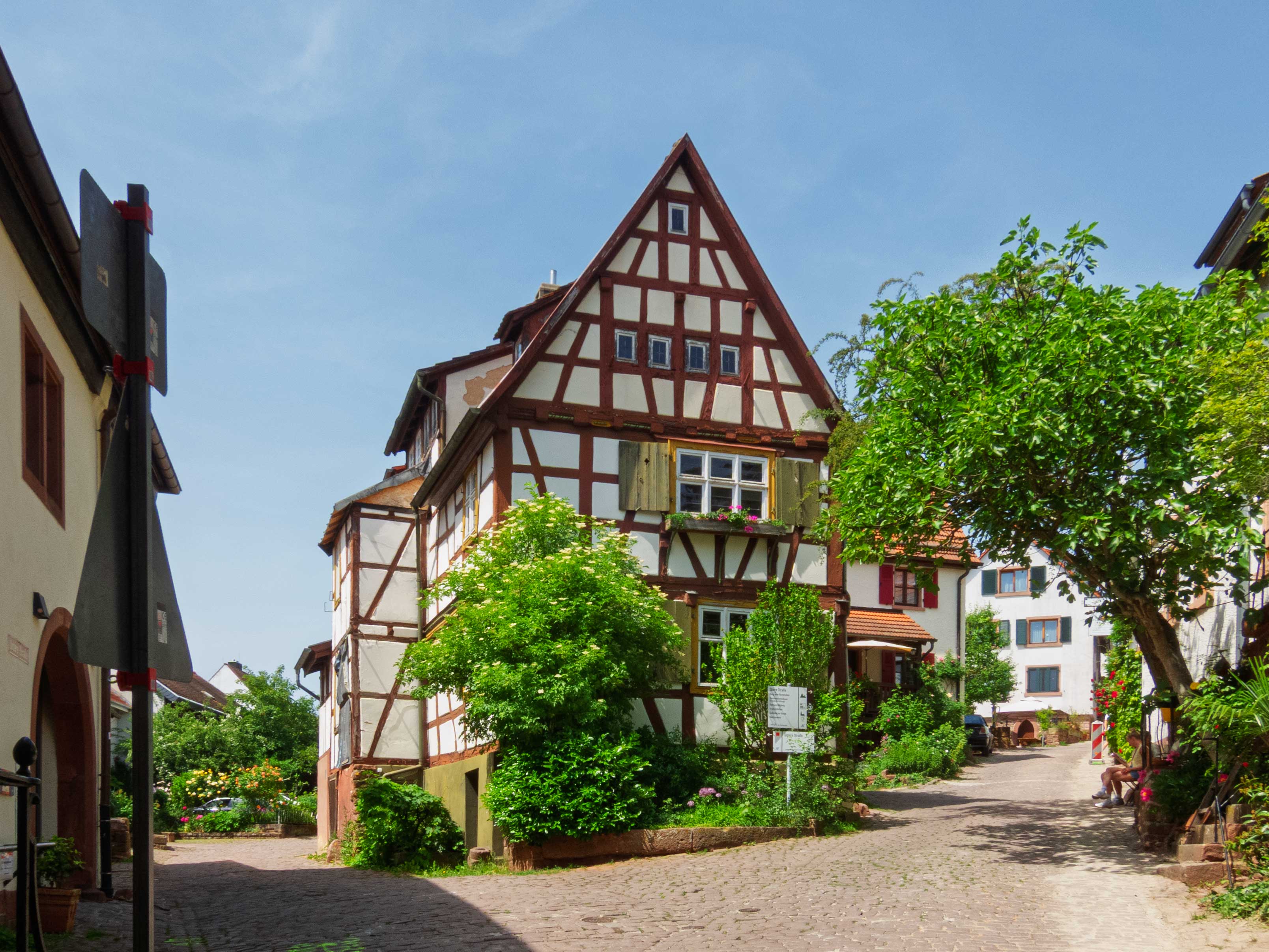
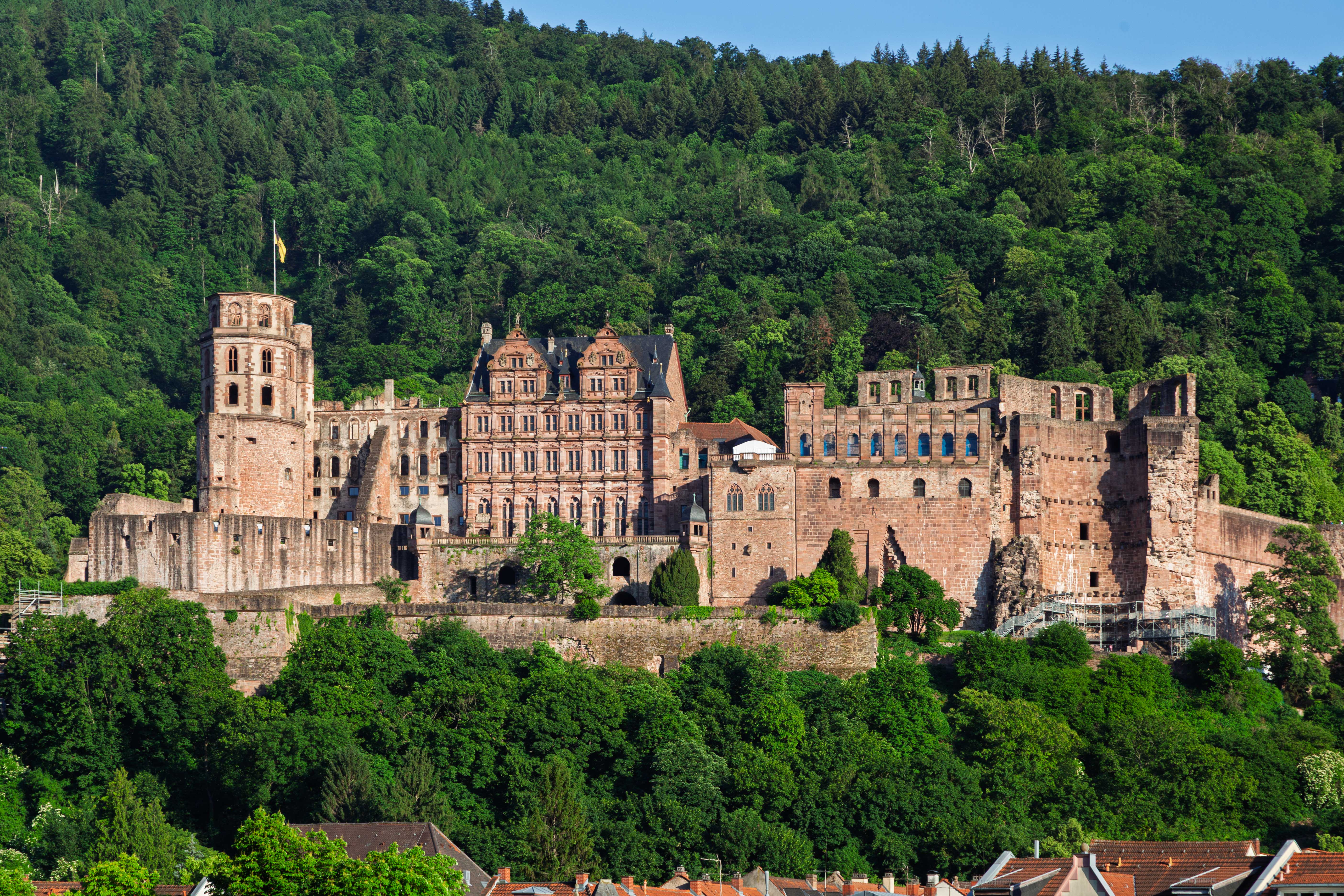
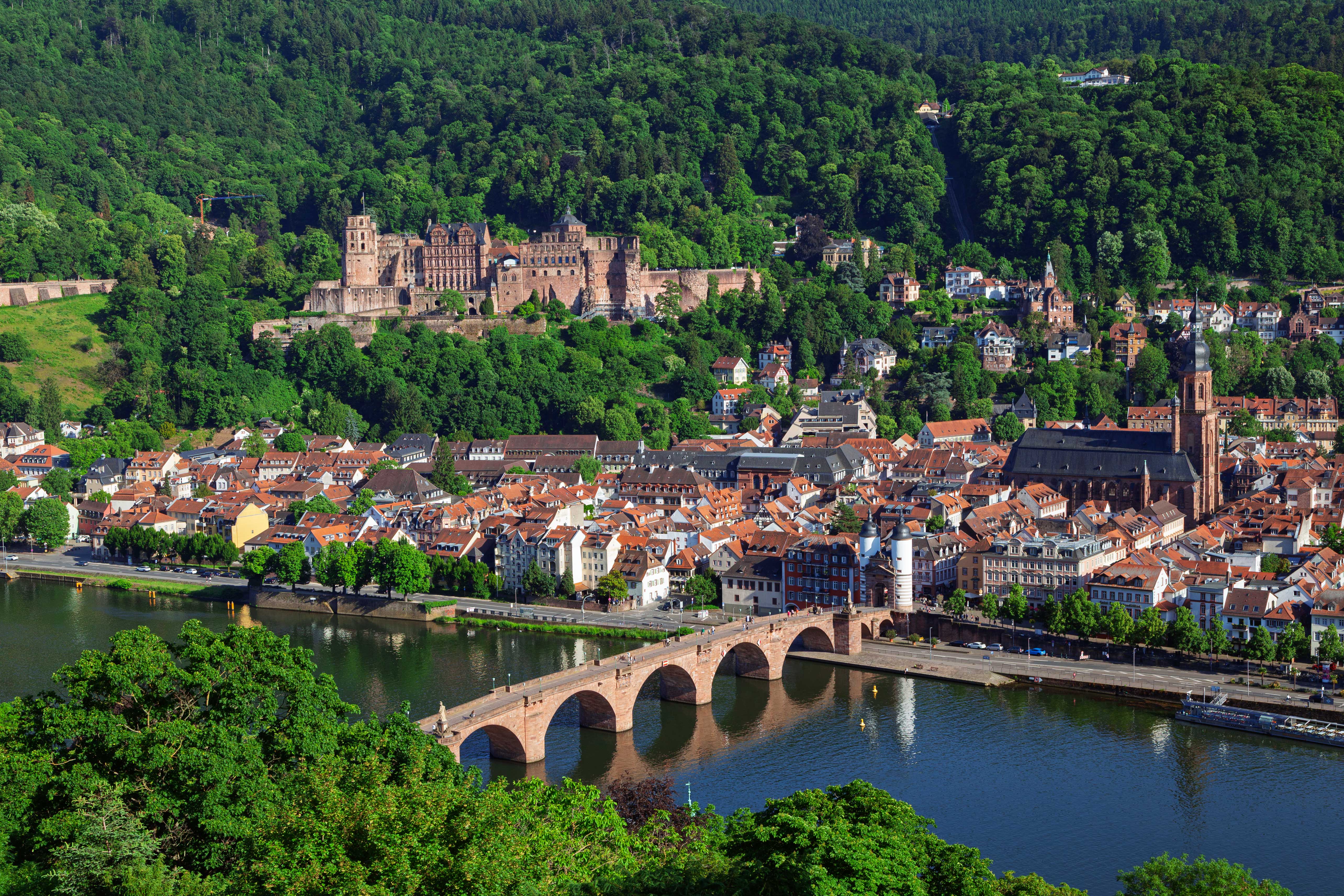
Although I've called this section "Heidelberg", we actually stopped a few miles to the east in a lovely small town called Dilsberg.
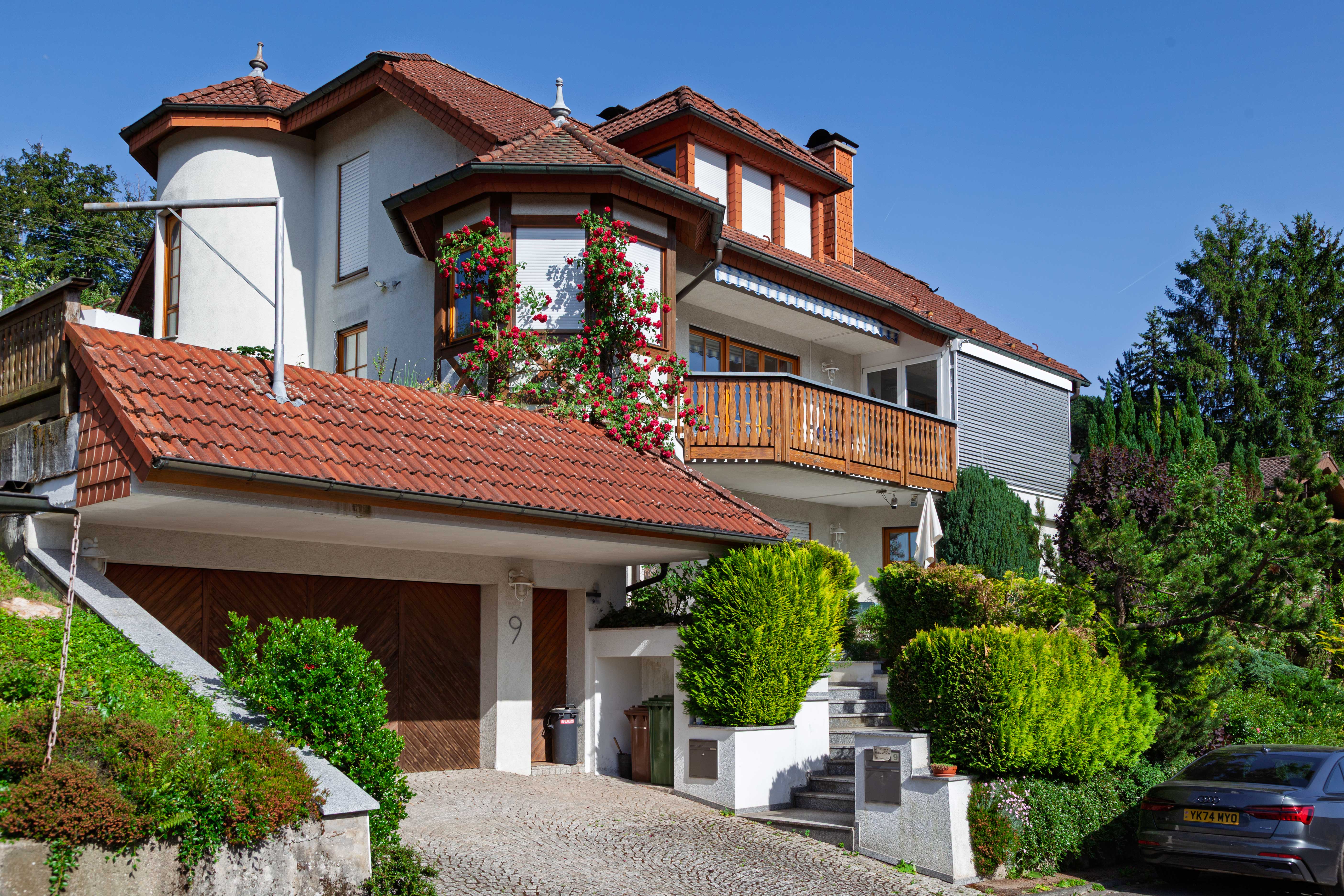
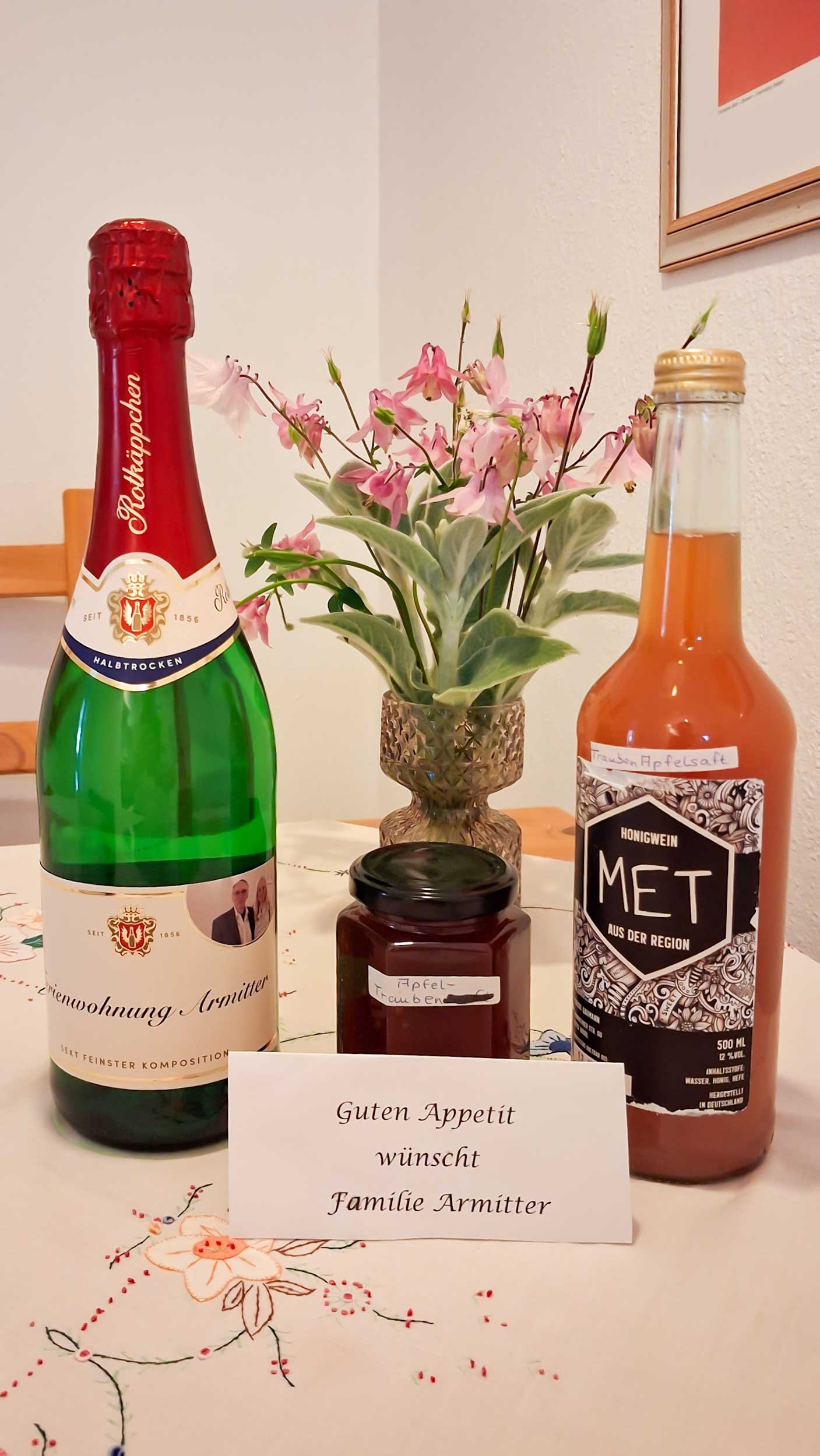
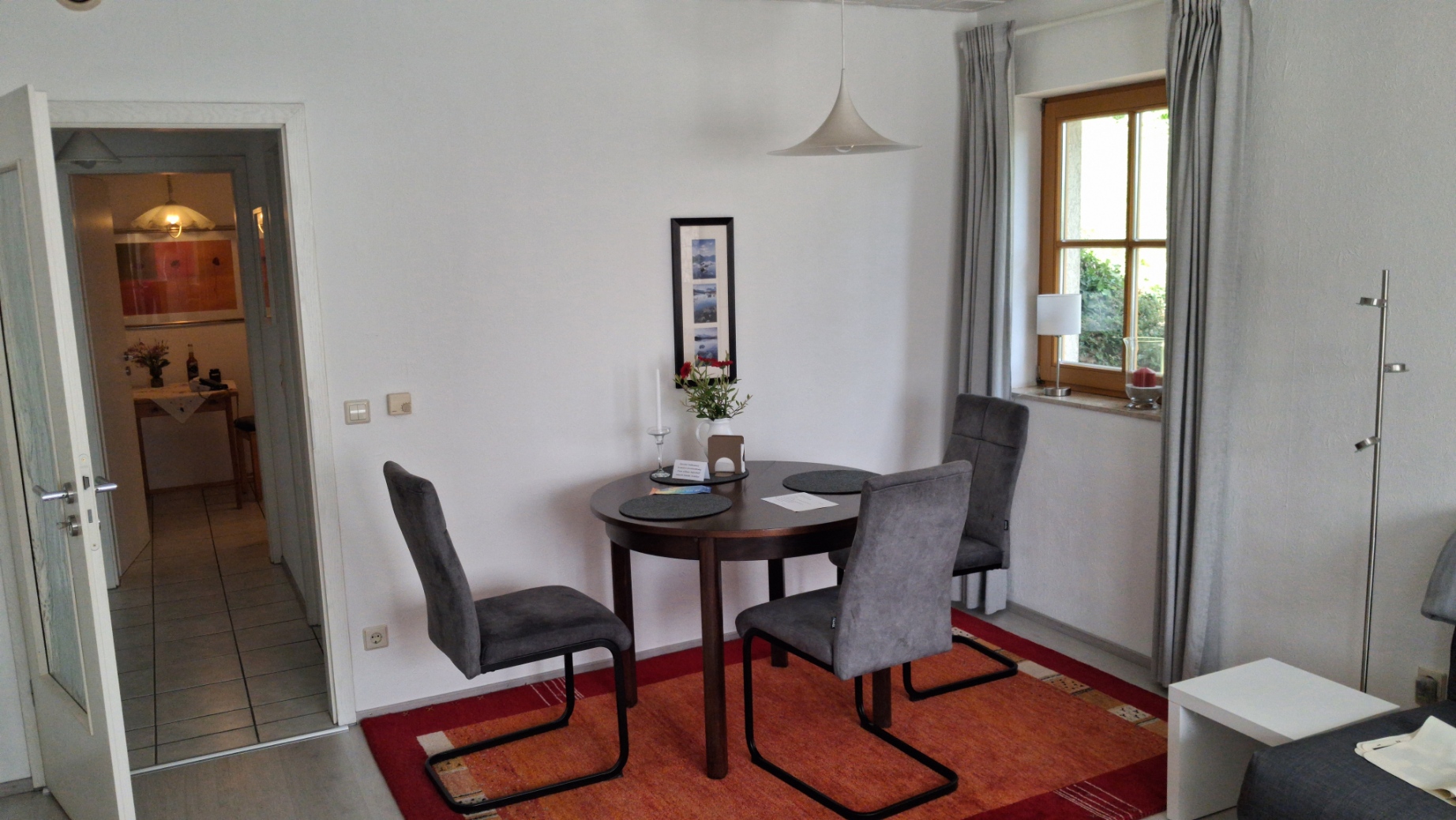
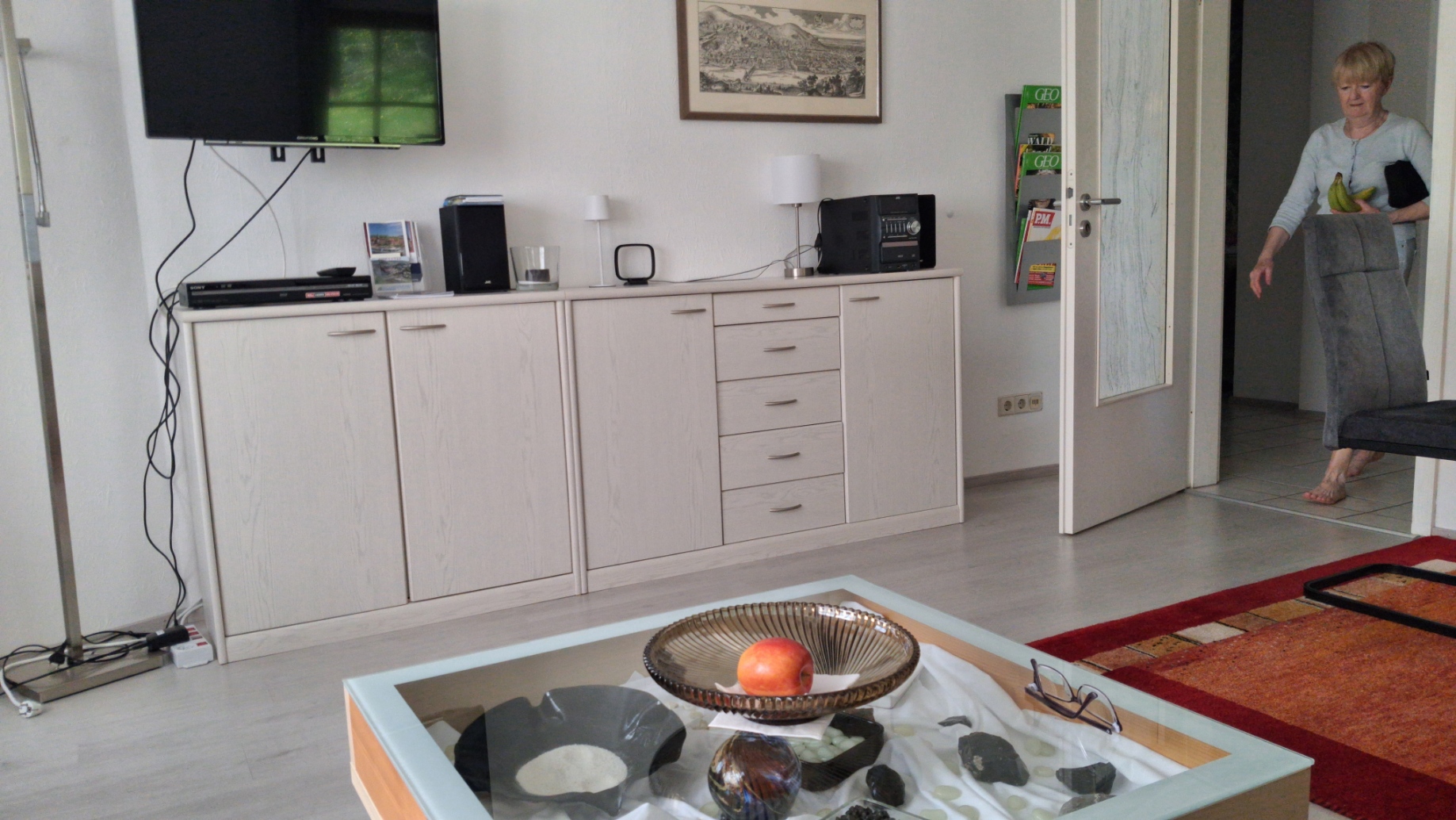
We stayed in Ferienwohnung Armitter, im Schafgarten 9, 69151 Neckargemünd. It was lovely accommodation and our hosts, Herr und Frau Armitter, were very friendly and helpful. They also presented us with some very nice gifts on our arrival (wine, homemade fruit juice and jam).
On our first full day in Dilsberg we visited the castle which stands on a hilltop over the town. Bergfeste Dilsberg was initially constructed in the mid-12th Century and because of its strategic location, it became a prime target during regional power conflicts across the 17th and 18th centuries. In the 19th century, the heavily damaged castle was partially abandoned and used as a stone quarry by locals before preservation efforts began.
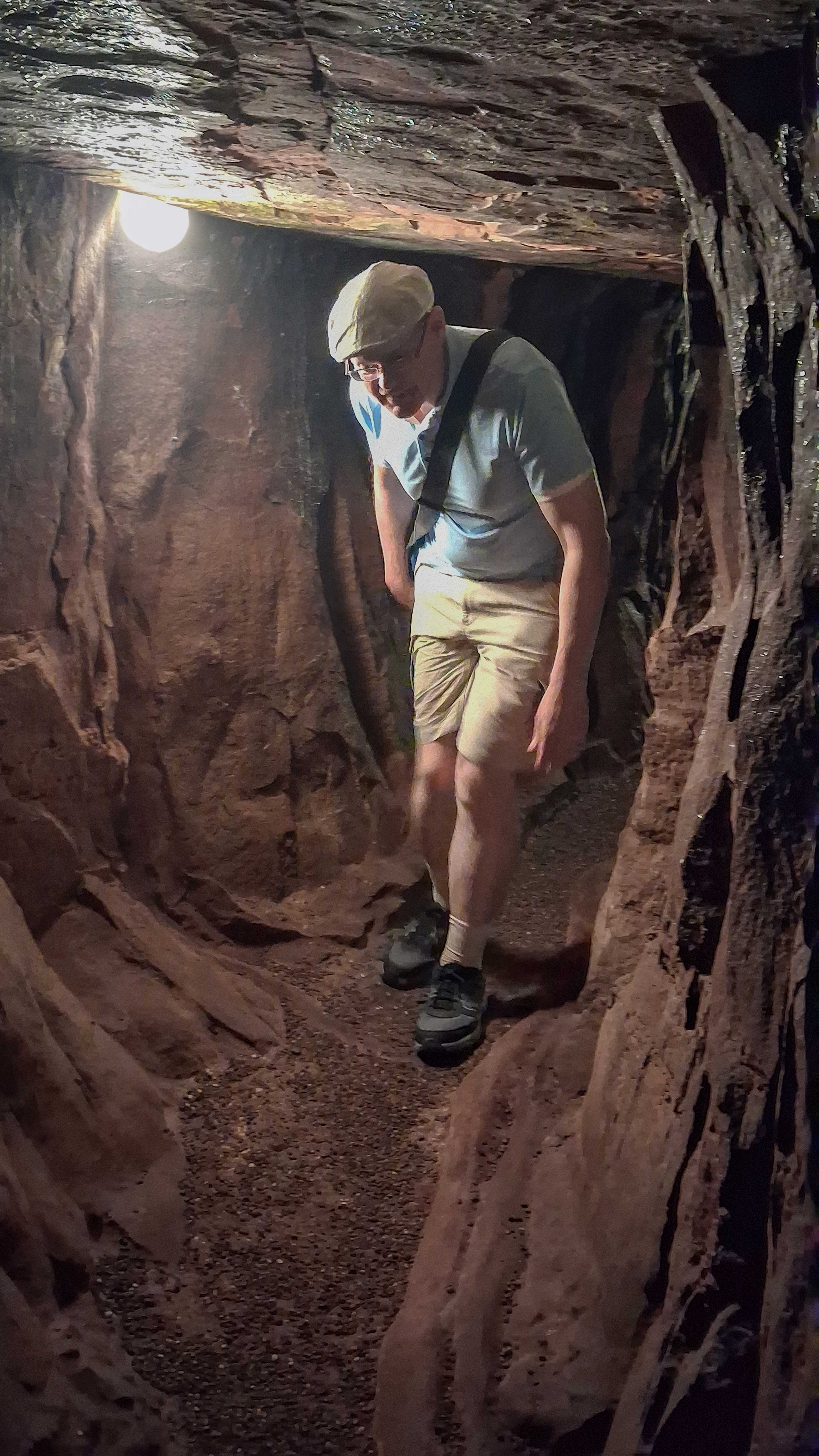
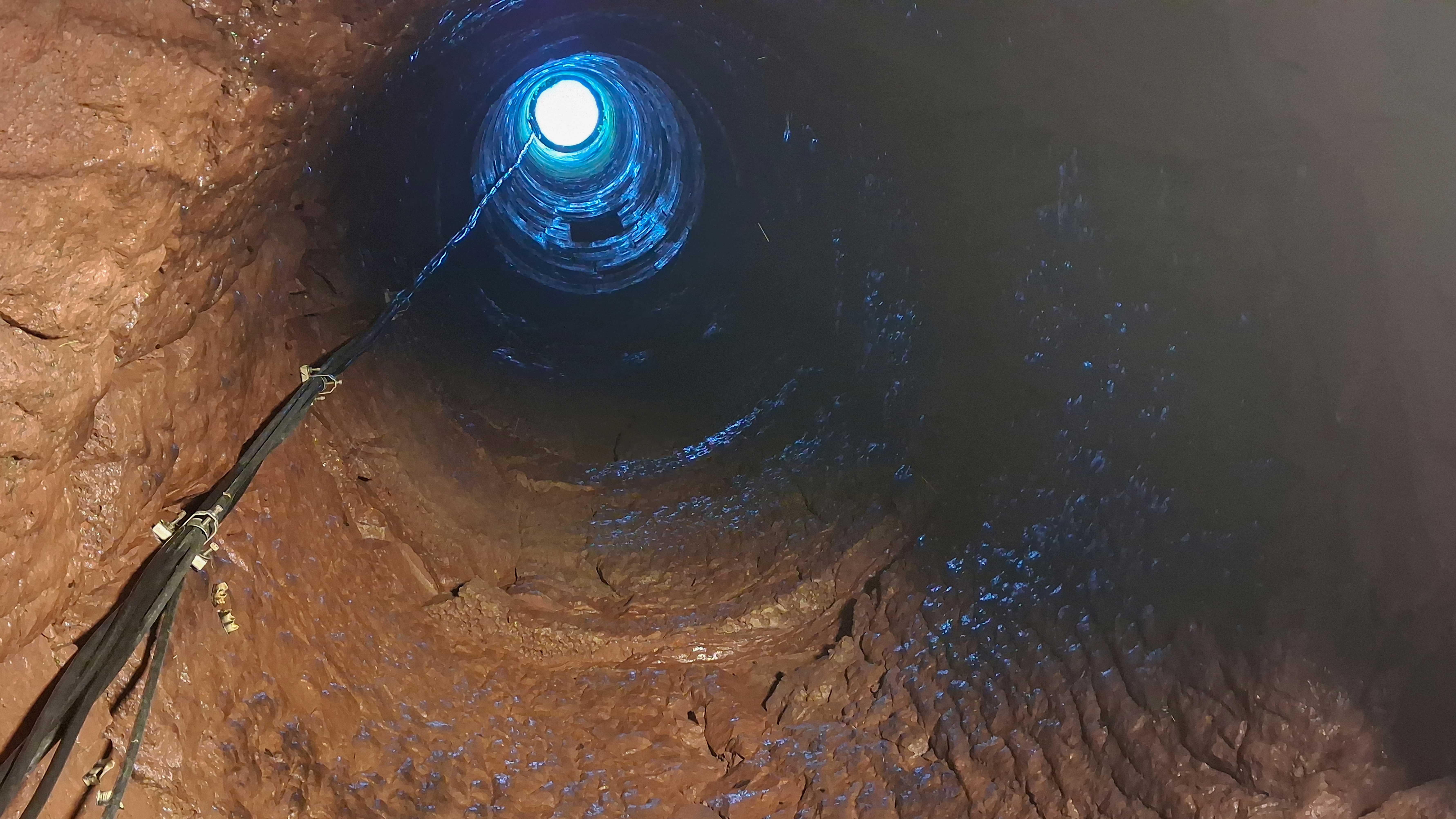
The site features a historic 21.5-meter-deep vertical draw-well (Burgbrunnen) originally carved straight down into the mountain bedrock around 1150 to survive long military sieges. We took a guided tour of the castle which included walking through the tunnel that led from the outside of the castle to the well.
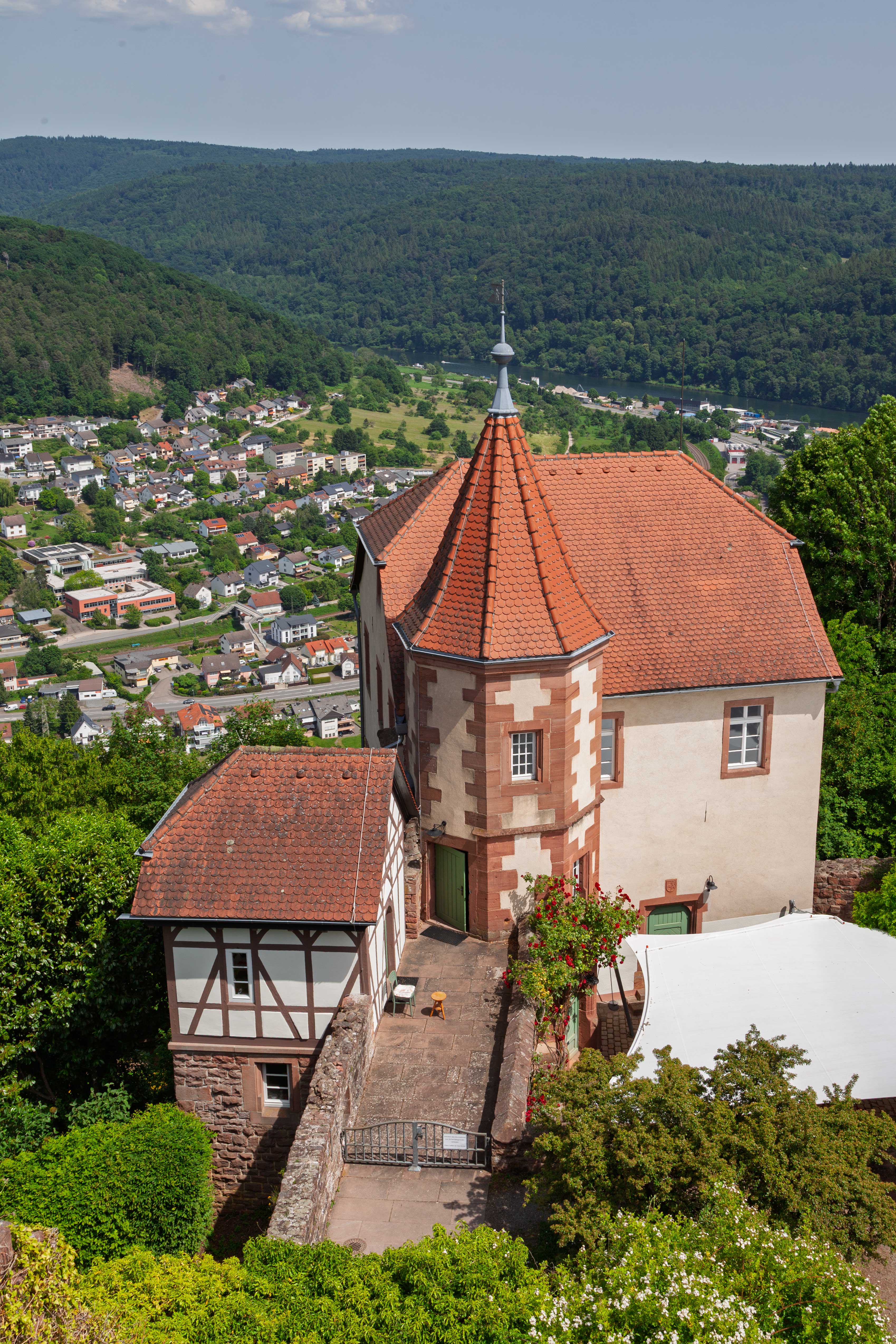
We also ascended up a couple of the castle's towers which gave us splendid views of the Neckar valley below:
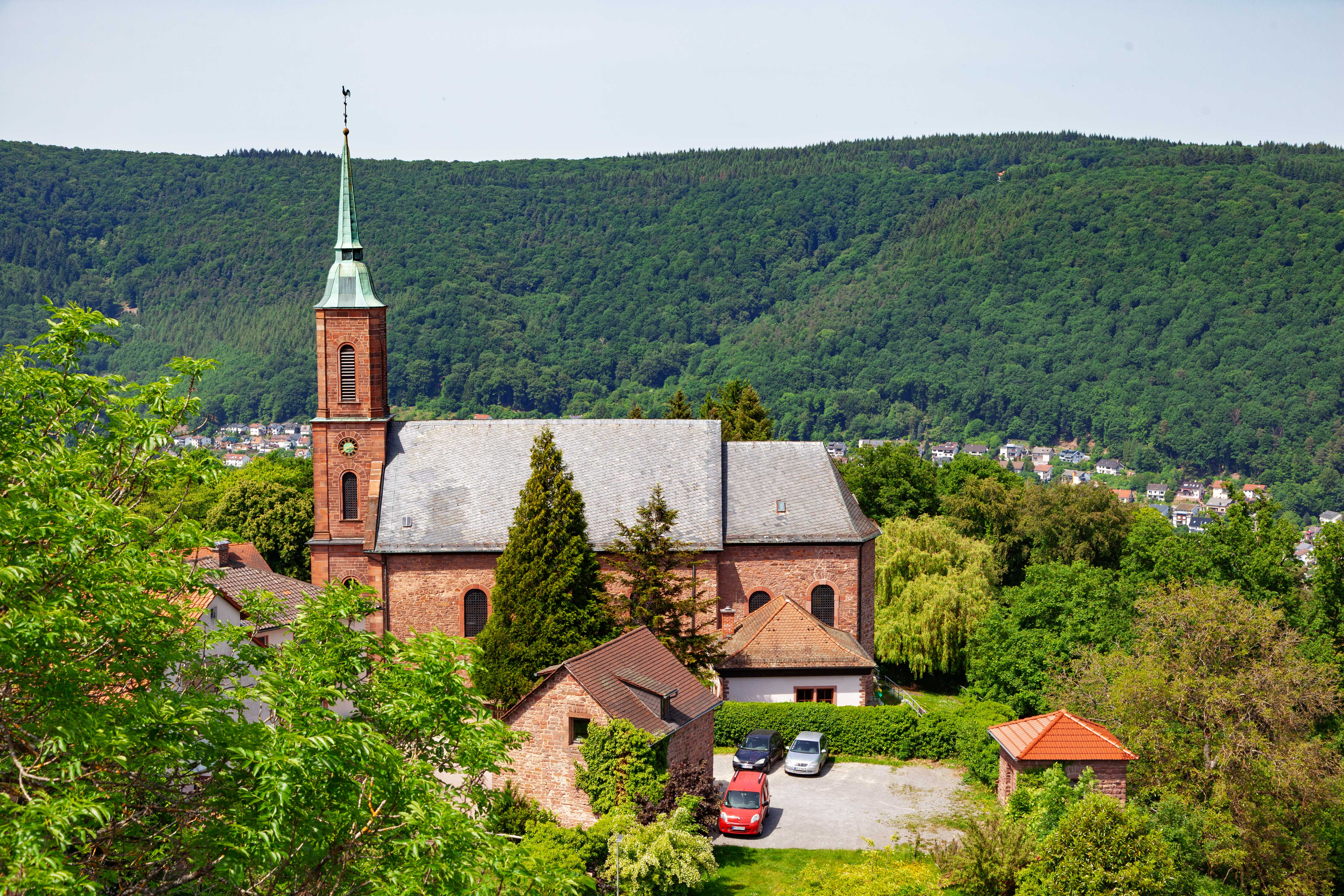
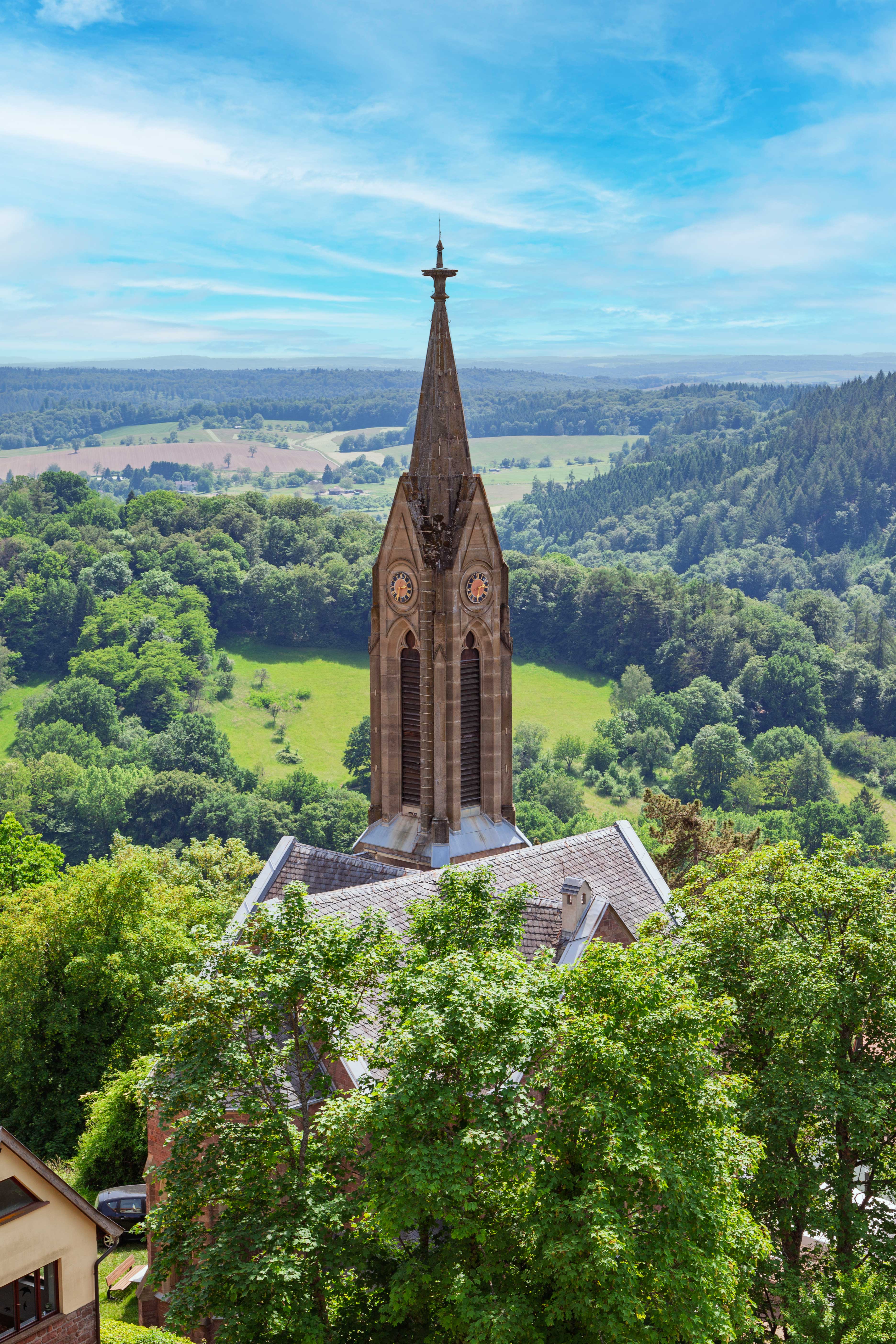
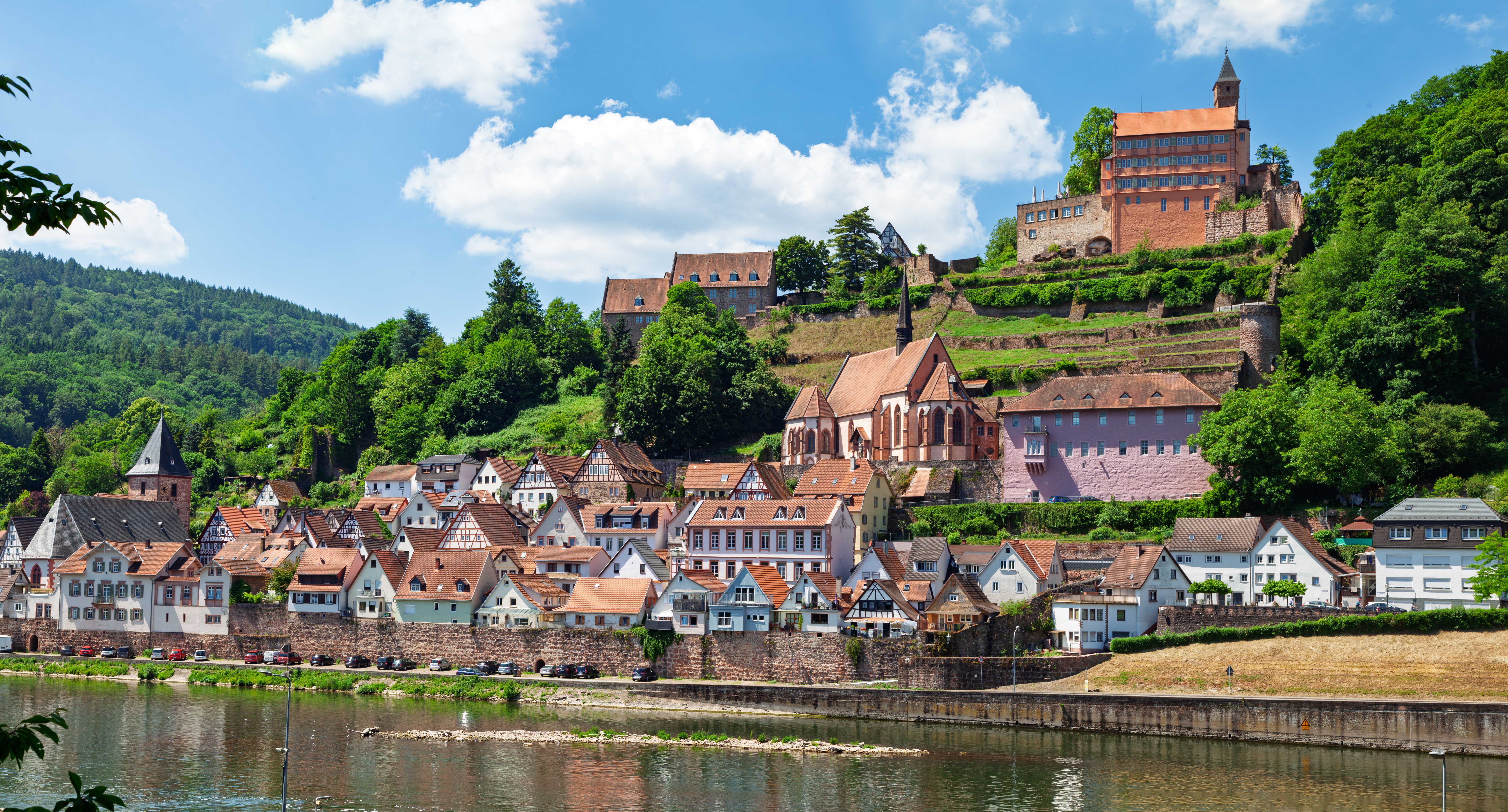
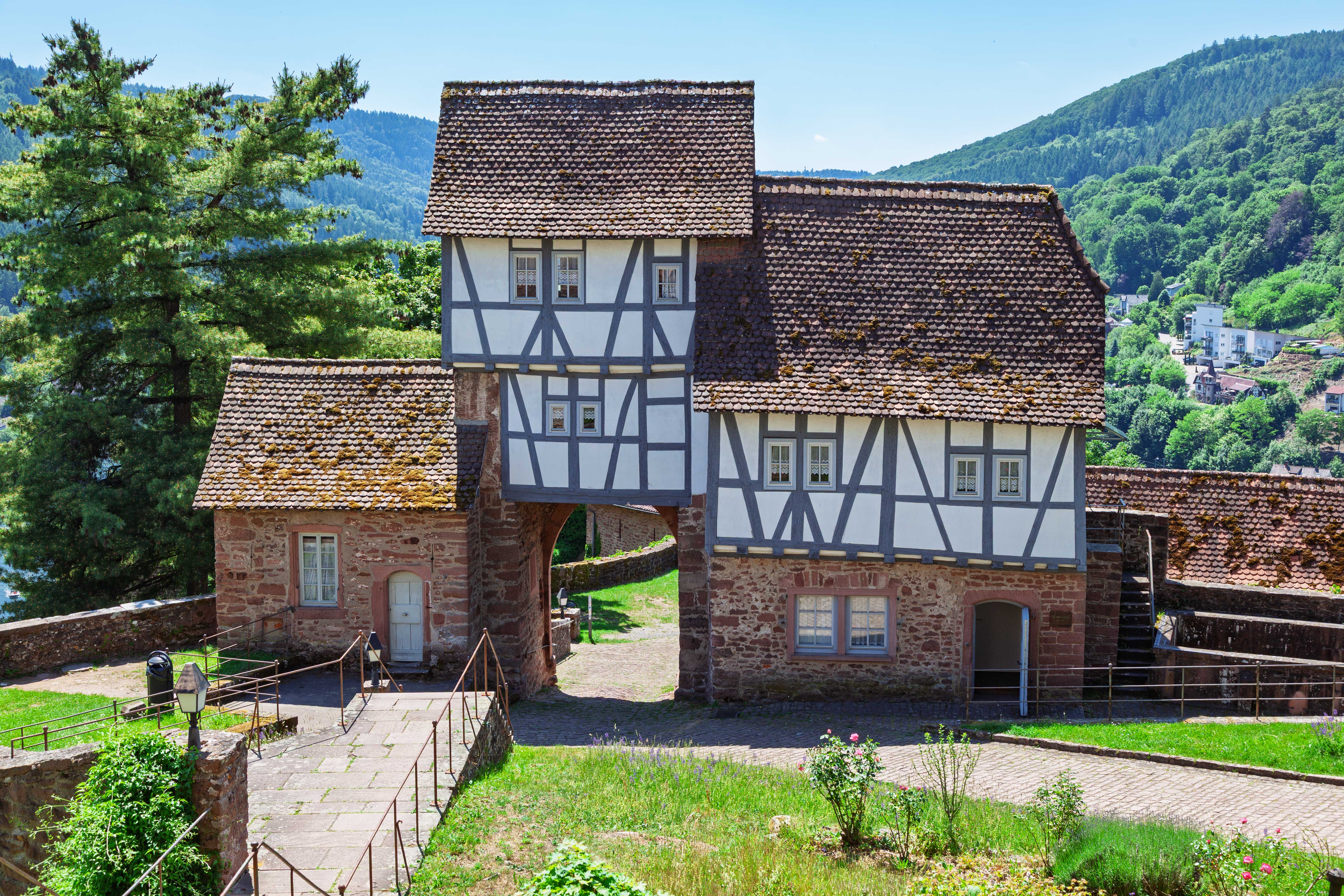
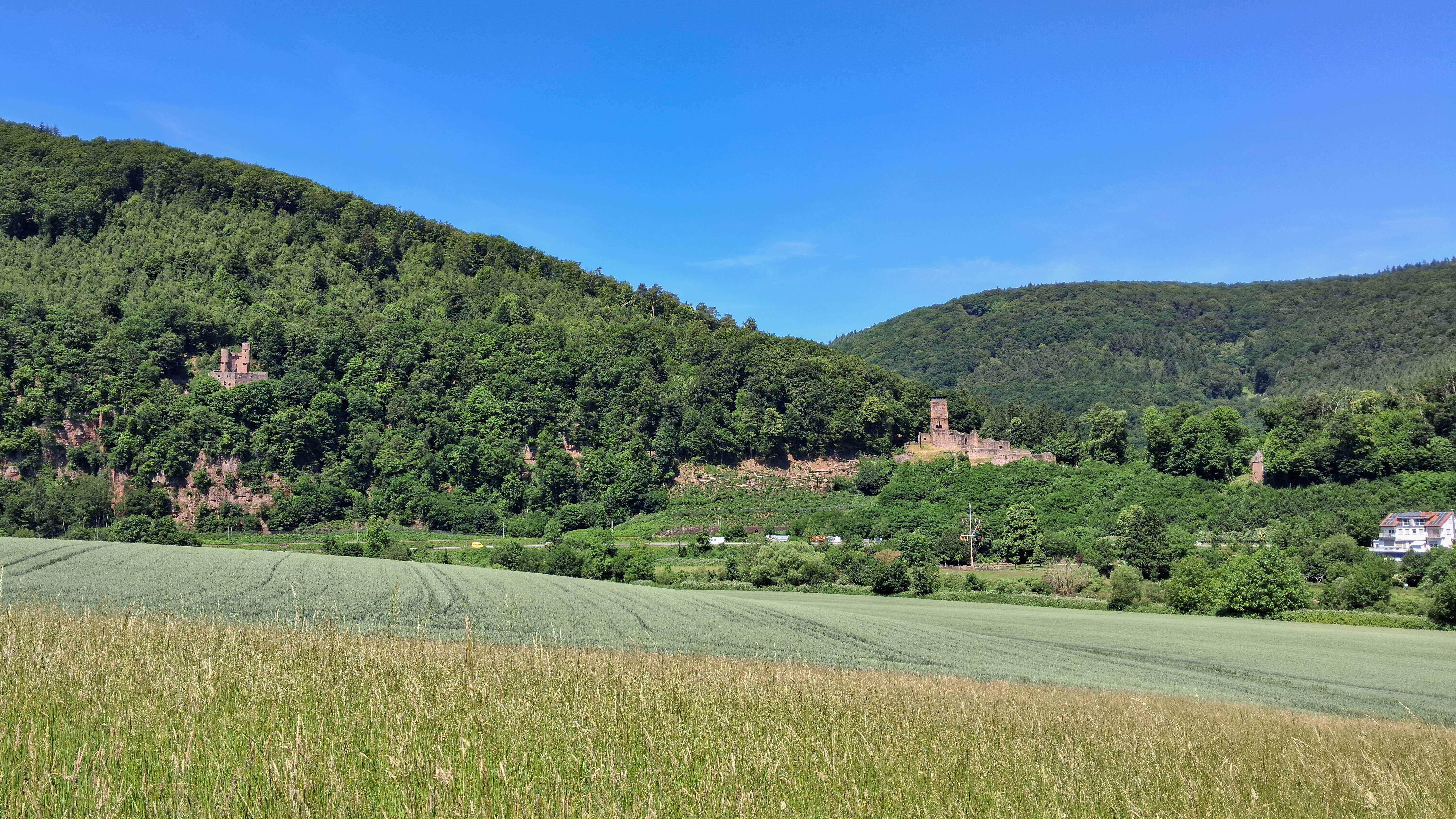
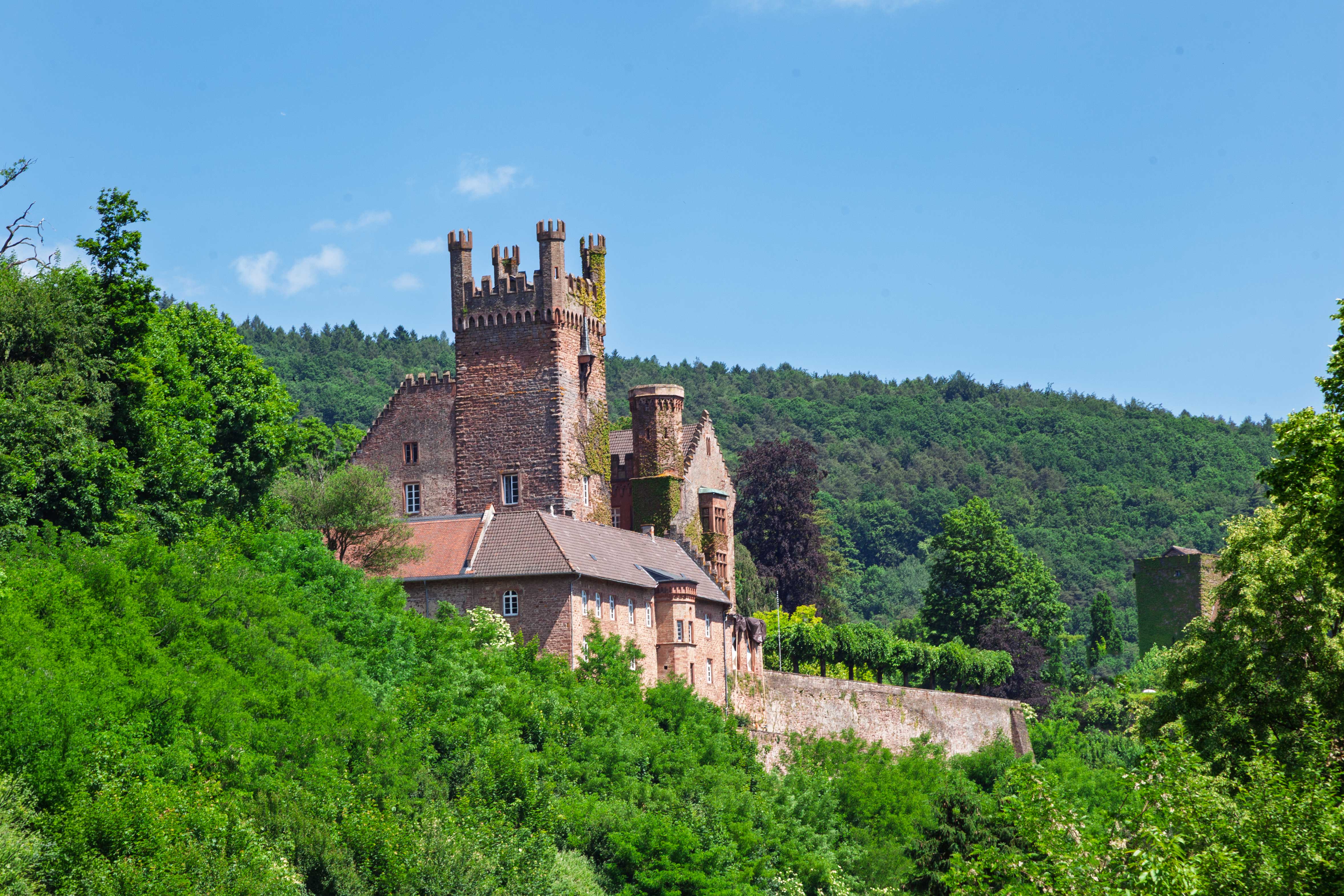
Getting to and from the castle was quite an interesting adventure for us. There was a funicular railway to get us up and down the steep hill on which the castle stands. There was no problem on the way up, but on the way down there were two trains and we didn't know which one was going down and which one was going up. So we just took pot luck and as it turned out we got the wrong one and were taken higher up the hill! We got off at the next station and took the next funicular down and back to the castle. Then we changed trains again ... and got in the wrong one again and went back up higher!!! Once more we got off and took another train down to the castle. This time we stopped on the same train and finally arrived back at the bottom ... third time lucky as they say!!
Speyer
Another drive out took us to the city of Speyer. It is one of Germany's oldest and most historically significant cities, located on the left bank of the Rhine in the state of Rhineland-Palatinate. One of its claims to historical significance is that it was here, at the Diet of Speyer in 1529, that the word "Protestant" was first officially used when a group of rulers openly protested Charles V's ban on Martin Luther's teachings and writings.